Japan Achieves 2% Inflation Target Amid Rising Food Prices
The Bank of Japan has declared that Japan's underlying inflation rate has reached its long-standing 2% target, marking a significant milestone in its efforts to overcome decades of deflation. This announcement, made in late October, coincides with a new wave of price increases set to take effect in November, affecting 1,477 food and beverage products. Research firm Teikoku Databank reports that the average price increase across these products is 17%, underscoring the growing gap between the Bank of Japan's inflation assessment and the financial pressures faced by households.
The central bank introduced its 2% inflation target in 2013 as part of a strategy to break Japan's long-standing cycle of stagnant prices and wages. For years, weak consumer demand, limited wage growth, and corporate reluctance to raise prices have reinforced one another, preventing the economy from achieving sustained inflation. Although the Bank of Japan now considers underlying inflation to have reached approximately 2%, the broader consumer price index presents a different picture.
Market Reading & Resources
Sponsor funding complete. Trade on.
Japan's consumer prices rose by 3.2% in 2025 compared to the previous year, while food prices surged by 6.8%, significantly exceeding the central bank's target. For households grappling with higher grocery bills, the distinction between overall inflation and the underlying trend may seem difficult to reconcile. The latest price increases are particularly concentrated in seasonings and condiments, which account for a large share of the products becoming more expensive in November.
Food manufacturer Kewpie has announced price increases ranging from approximately 3% to 25% across 224 products starting November 1. For instance, its flagship 450-gram Kewpie Mayonnaise has risen from 517 yen to 565 yen, reflecting an increase of about 9.3%. These price hikes illustrate why many consumers remain skeptical of the central bank's declaration that inflation has reached 2%, especially when the prices of everyday necessities are rising at substantially higher rates.
The explanation for this discrepancy lies in the different measures of inflation being utilized. The Bank of Japan evaluates what it calls the "underlying inflation rate," which aims to identify more persistent price trends by excluding temporary influences. These influences include weather-related fluctuations, short-term government subsidies, and other factors expected to dissipate over time. Developments in the Middle East, changes in energy prices, and movements in the price of naphtha, a petroleum-derived raw material widely used in chemical manufacturing, are also assessed to determine whether their effects are temporary or likely to persist.
The central bank's approach aims to capture the underlying strength of inflation rather than temporary fluctuations that may distort the broader price picture. Unlike the consumer price index, however, underlying inflation is not a single statistical measure that can be calculated directly from a fixed set of figures. Instead, the Bank of Japan conducts a comprehensive assessment using multiple indicators, including expectations among households and businesses about future price increases, as well as the extent to which particular cost pressures are likely to continue.
This introduces an element of judgment into the central bank's assessment, although decisions are not made by an individual official. The Bank of Japan's nine Policy Board members evaluate economic conditions at monetary policy meetings, bringing together their assessments of inflation, wages, and broader economic developments. Governor Kazuo Ueda stated at a recent press conference that all nine members agreed with the latest assessment, indicating a consensus that underlying inflation has broadly reached the 2% level.
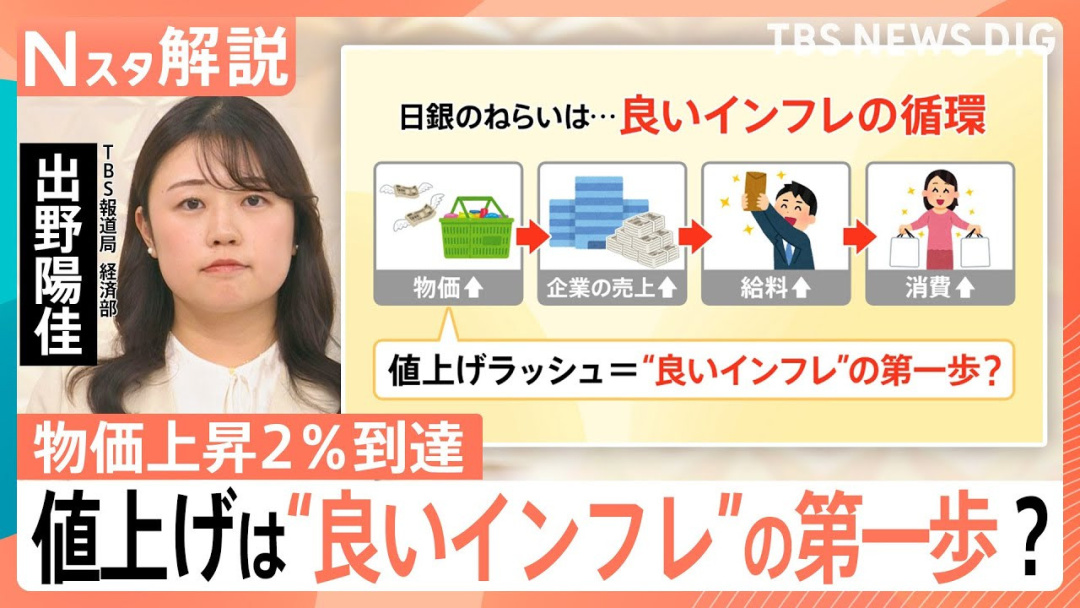
The distinction between achieving a 2% inflation target and simply making goods and services more expensive is crucial. The central bank's objective is to establish a sustainable cycle in which higher prices support corporate revenues, enabling companies to increase wages, which in turn encourages additional consumption. This cycle is often described as a virtuous cycle of inflation, contrasting with price increases driven primarily by rising import costs or shortages.
The Shift in Japanese Business Pricing Strategies Amid Inflation
For Japanese companies, the ability to raise prices has become increasingly important after decades in which businesses frequently absorbed higher costs rather than passing them on to customers. When inflation remained close to zero, companies were hesitant to increase prices for fear of losing customers, which constrained revenue growth and limited resources for wage increases. A more inflationary environment has made it easier for businesses to pass higher production and distribution costs onto consumers, potentially creating more room for employee pay raises.
However, higher prices do not automatically translate into improved living standards. Much of Japan's recent inflation has been influenced by external pressures, including higher energy costs associated with geopolitical tensions. Such increases can weaken household purchasing power without generating a corresponding rise in domestic economic activity. For inflation to become genuinely beneficial, wages must continue rising alongside prices, allowing household purchasing power to recover and consumption to strengthen.
Japan has made progress toward establishing this relationship, but the transition remains incomplete. The yen's weakness is another significant factor contributing to higher living costs. As Japan relies heavily on imports for energy, food ingredients, and industrial materials, a weaker currency increases the yen-denominated cost of overseas purchases, which can eventually be reflected in retail prices, adding pressure to household budgets even when domestic demand remains relatively subdued.
The difference between Japanese and U.S. interest rates has significantly influenced currency movements, encouraging investors to favor dollar-denominated assets when American yields are higher. This raises questions about whether the Bank of Japan should increase interest rates more quickly to narrow the interest-rate gap and help contain imported inflation. With the U.S. Federal Reserve holding off on further rate increases, an additional rate increase by the Bank of Japan could potentially narrow the difference between the two countries' borrowing costs, supporting the yen and easing some pressure on import prices.
However, the central bank has opted for a more cautious approach. Its primary responsibility is to maintain price stability, and policymakers must weigh the potential benefits of a stronger yen against the broader economic consequences of higher borrowing costs. Raising rates too quickly could increase the burden on households with loans and mortgages while also raising financing costs for businesses. An additional concern is whether the full effects of previous rate increases have had sufficient time to work through the economy. Monetary policy changes typically affect borrowing, investment, employment, and consumption gradually, making it challenging to determine their ultimate impact immediately after a decision.
Assessing the Impact of Inflation on Japan's Economic Stability
If the Bank of Japan raises rates again before fully assessing the consequences of an earlier increase, it risks tightening financial conditions more than necessary. This is particularly sensitive in Japan, where the economy is still adjusting to a prolonged period of exceptionally low interest rates. For businesses, higher borrowing costs could discourage investment or expansion, while households may reduce spending as loan repayments become more expensive.
The achievement of the 2% underlying inflation target nevertheless represents an important change in Japan's economic policy landscape. For more than a decade, the Bank of Japan's central challenge was generating enough inflation to escape the persistent weakness in prices and wages that characterized the deflationary economy. With underlying inflation now assessed to have reached its target, the focus is increasingly shifting toward maintaining price stability while ensuring that economic growth and wage increases remain sustainable. The challenge is especially pronounced because consumers continue to experience inflation very differently from the central bank's statistical assessment. A 2% underlying inflation rate may indicate that Japan is approaching a more stable economic environment, but it offers limited immediate relief to households facing food prices that rose 6.8% last year and another round of substantial increases in November. Whether Japan has truly achieved a healthy inflation cycle will ultimately depend less on the central bank's declaration than on whether wages can consistently keep pace with living costs, allowing households to benefit from the economic transformation policymakers have pursued since 2013.