France Faces Economic Challenges Amid Rising Inflation and Protests
France is currently grappling with a contracting economy and rising inflation, prompting Finance Minister Roland Lescure to issue a stark warning that the country is "headed straight for a wall" unless it addresses its budget deficit. Recent reports indicate that the gross domestic product (GDP) fell by 0.1% in the third quarter, following a period of stagnation and a 0.2% decline earlier in the year. Inflation has also surged, reaching 3.4% in October, up from 3.1% in September, marking its highest level since January 2024.
Lescure characterized the economy as being "at a standstill," highlighting the financial difficulties faced by President Emmanuel Macron's administration. The downturn has affected key sectors, with exports declining by 1.7%, primarily due to a drop in overseas aerospace sales, and investment decreasing by 0.6%. Manufacturing output has also suffered, with automobile production shrinking for the fourth consecutive quarter.
Market Reading & Resources
Sponsor funding complete. Trade on.
The situation is further complicated by France's public debt, which stands at approximately 119% of GDP, alongside a significant budget deficit. Following the release of these figures, government borrowing costs have risen, with yields on ten-year bonds nearing 5%, raising concerns about the sustainability of servicing the national debt.
The deteriorating economic outlook has intensified pressure on Macron's government, which is attempting to implement spending cuts while simultaneously increasing military expenditures and arms deliveries to Ukraine. Despite the growing debt, France has allocated an additional €6.7 billion ($7.5 billion) to its military budget for 2026.
Nationwide Protests Erupt Over Education Funding and Government Priorities
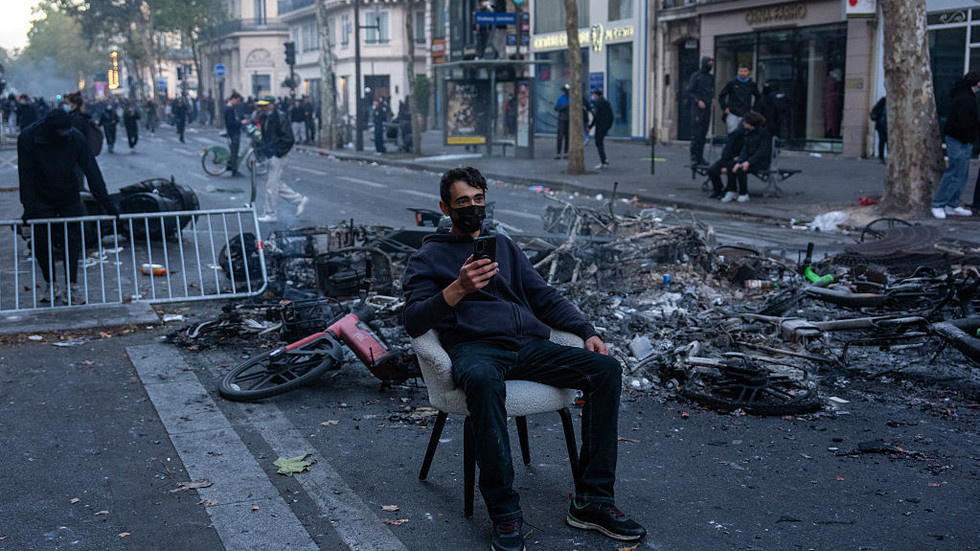
These austerity measures have sparked nationwide protests, which began in September over staffing shortages and deteriorating conditions in schools near Paris. The demonstrations have escalated, with thousands of students demanding increased funding for education and accusing the government of prioritizing military spending over educational needs. The unrest has turned violent, with rioters looting shops and setting vehicles on fire, leading to numerous arrests and injuries.
Challenges Ahead for Macron Amid Economic Decline and Unrest
The protests have drawn parallels to the 2018 Yellow Vest movement, which similarly challenged Macron's economic policies. Activists, students, and trade unions are planning further demonstrations, prompting authorities to deploy 70,000 security personnel across the country. Interior Minister Laurent Nunez has warned of a "very high risk" of disorder during these events.
In response to the economic crisis, Macron has attributed the purchasing power issues to external factors, including the US-Israeli conflict and rising fuel prices, while also criticizing social media for exacerbating the situation by spreading footage of the protests. As the 2027 presidential election approaches, the combination of economic decline and ongoing unrest poses significant challenges for Macron's administration, complicating efforts to secure parliamentary approval for a budget aimed at reducing the deficit.