US Tech Stocks Decline Amid Concerns Over AI Spending
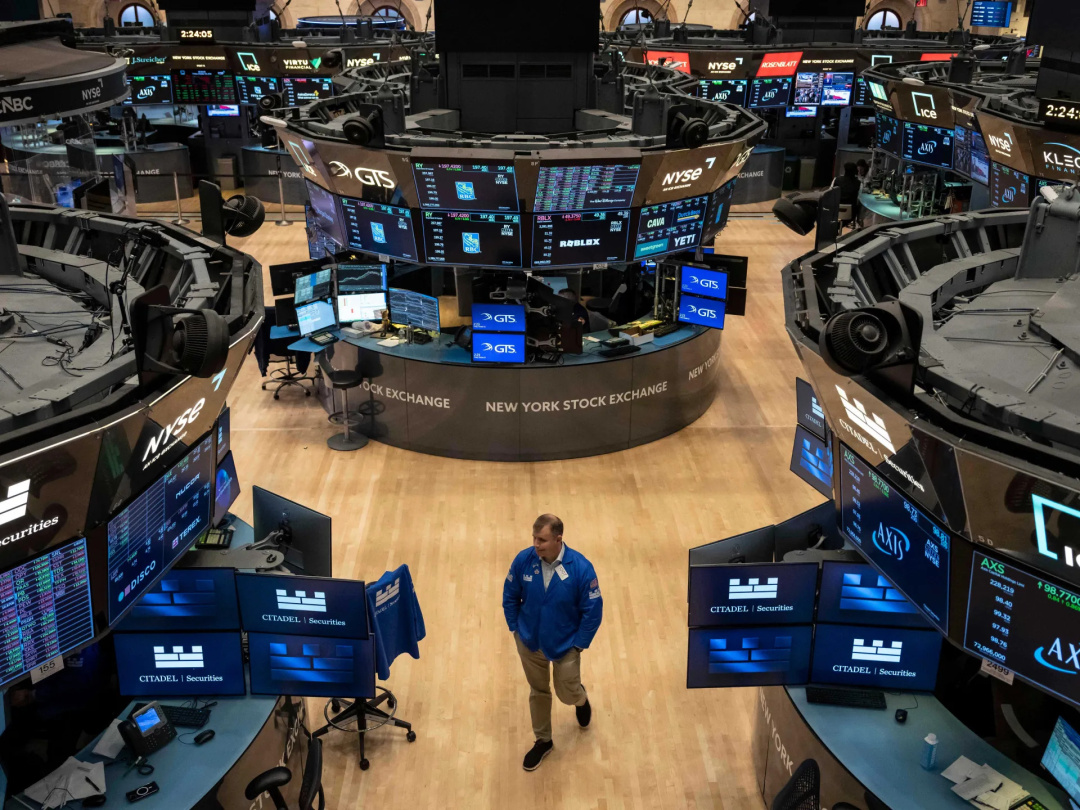
US tech stocks have faced a sharp decline amid growing concerns over the sustainability of significant capital investments in artificial intelligence. The Nasdaq Composite, heavily influenced by tech firms associated with the AI boom, dropped 2.6 percent on Thursday, marking its most considerable decline since a 4.2 percent fall on June 5. The broader S&P 500 index also fell by 1.21 percent, its largest drop since a 1.52 percent decrease on July 29.
Among the so-called "Magnificent 7," which represent over one-third of the overall market, all but Apple saw substantial losses. Meta Platforms experienced a nearly 7 percent drop after announcing an increase in its projected capital spending for the year to between $135 billion and $145 billion, despite its net profit falling short of expectations. Amazon's stock fell by 4.6 percent, while Nvidia saw a decline of 4.4 percent. Tesla and Alphabet both dropped 3.1 percent, and Microsoft decreased by 2.2 percent.
Market Reading & Resources
Sponsor funding complete. Trade on.
The sell-off extended to other major tech players, with Intel and Advanced Micro Devices both experiencing declines of around 8 percent, and Broadcom falling by 4.3 percent. The market's downturn was exacerbated by rising oil prices, which have surged since February due to the geopolitical tensions surrounding the US-Israel conflict with Iran. Brent crude futures rose by 4 percent on Thursday and continued to climb, surpassing $114.20 a barrel, the highest level since May.
As a result of these developments, major stock markets in Asia opened lower on Friday, reflecting the losses on Wall Street. Japan's Nikkei 225 index fell more than 2 percent in morning trading before recovering slightly, while South Korea's KOSPI dropped as much as 3.5 percent. The Hang Seng Index in Hong Kong also saw a decline of about 0.5 percent.
Market Sentiment Drives Recent Tech Stock Fluctuations
Jay Goldberg, a senior analyst at Seaport Research Partners in San Francisco, noted that the market fluctuations appear to be driven more by sentiment than by underlying fundamentals. He stated, "In short, nothing has changed. Investors have just decided to be afraid this week. Everyone I speak to points to a different cause for the downfall. It’s just a giant wall of worry."
Investor Sentiment Shapes AI Investment Debate
Goldberg acknowledged that there are legitimate concerns regarding the AI trade, but emphasized that the extent of the market's shift is largely influenced by investor sentiment rather than any tangible reasons. The substantial investments made by US tech companies in AI have sparked intense debate about the possibility of a market bubble reminiscent of the dot-com crash in 2000. While some analysts argue that the current levels of investment in data centers and graphics processing units are unsustainable, others believe that AI will revolutionize society to an extent that justifies the significant financial commitments.
According to technology insights company Gartner, global AI investment is projected to reach $2.7 trillion in 2026 and $3.6 trillion in 2027.