Uncertainty Surrounds AI's Economic Impact Amid Inflation Concerns
In the fall of 2022, inflation rates surged past 9%, leading many to believe that a recession was imminent. The stock market experienced significant declines, with the S&P 500 and Nasdaq 100 both suffering substantial losses. However, the release of OpenAI's ChatGPT in late 2022 marked a turning point, as many now attribute the subsequent AI boom as a key factor in avoiding a recession and contributing to a renewed bull market.
Looking back, it is evident that during the pandemic and the meme-stock frenzy of 2020 and 2021, the tech industry was focused on promoting concepts like the metaverse and cryptocurrencies, often sidelining discussions about artificial intelligence. Even the creators of ChatGPT were surprised by its rapid adoption, with initial user estimates falling short of the actual one million users who signed up in the first week.
Market Reading & Resources
Sponsor funding complete. Trade on.
This unpredictability raises questions about the forecasts surrounding AI's impact on the economy. For instance, a survey conducted by Anthropic among its staff predicted a median GDP growth of 17% by 2030, a figure that has never been achieved in the post-WWII era. Critics point out that such optimistic projections overlook the real-world barriers that could hinder economic growth, including potential responses from the Federal Reserve and government regulations regarding job displacement caused by AI.
Exploring AI's Role in Financial Management Amidst Institutional Hesitations
Recent discussions in financial media highlight the complexities of AI's integration into the economy. For example, AI agents could potentially help consumers earn more interest on their cash by actively managing their accounts. However, banks like JP Morgan are already taking measures to restrict AI access to customer accounts, illustrating the friction between technological advancement and existing financial systems.
Navigating the Uncertain Future of AI in the Economy
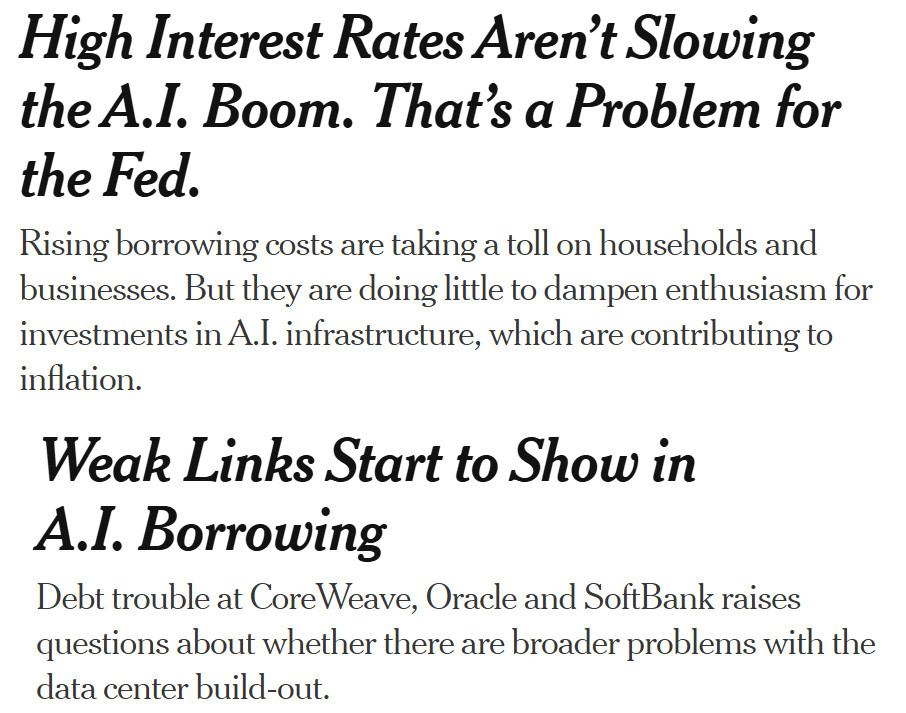
As AI continues to evolve, it is essential to acknowledge the limitations of predictions regarding its economic impact. The interplay between technology, politics, and regulation will shape the future landscape, and the potential for public backlash against AI advancements cannot be ignored. The ongoing discourse around interest rates and their effects on the AI boom further complicates the narrative, as the market grapples with uncertainty.
The current phase of innovation is characterized by speculation and excitement about the future. However, it is crucial to recognize that no one can definitively predict how these developments will unfold. The unpredictability surrounding AI's role in the economy is both exhilarating and daunting, underscoring the need for cautious optimism as we navigate this transformative period.