The Hidden Costs of Bitcoin as an Inflation Hedge
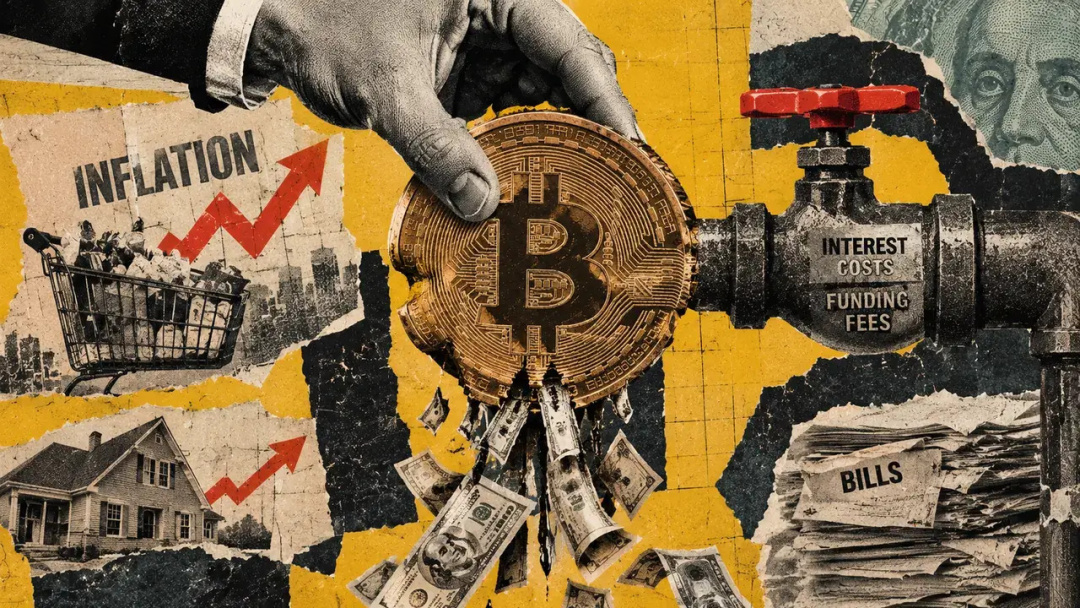
The costs associated with borrowing, missed interest income, and futures fees can significantly diminish returns on Bitcoin investments, even when the cryptocurrency maintains its value. This issue becomes more pronounced in a high-inflation environment.
The latest US inflation report for September indicated a year-over-year increase of 3.7% in consumer prices, raising concerns about the dollar's purchasing power. This inflationary pressure contributes to elevated interest rates, making it more costly to borrow funds for purchasing Bitcoin and holding it while awaiting price increases.
Market Reading & Resources
Sponsor funding complete. Trade on.
Bitcoin's immediate reaction to the inflation report raises questions about future performance. Two investors can purchase Bitcoin at the same price and hold it for the same duration, yet their returns can vary dramatically based on their financing strategies.
For instance, an investor who buys $10,000 worth of Bitcoin with cash incurs no interest payments while holding the asset. This means that the value of their coins can fluctuate without the pressure of loan repayment.
In contrast, consider an investor who borrows an additional $10,000 at an 8% annual interest rate to buy $20,000 of Bitcoin. This investor doubles their exposure but also takes on an $800 annual interest obligation. If Bitcoin's price remains unchanged at the end of the year, this investor would need to sell their position and repay the loan plus interest, resulting in a loss of $800.
The difference in outcomes becomes clearer when examining various hypothetical scenarios. The leveraged investor must see Bitcoin's price increase by 4% just to cover the interest costs. To match the cash investor's hypothetical return of $426, Bitcoin would need to rise by 6.13%. While a 10% price increase would benefit the leveraged investor, a 10% decline would exacerbate their losses.
Understanding the Impact of Futures Trading on Bitcoin Investments
Additionally, the dynamics of Bitcoin futures can obscure the effects of leverage. Traders can take on Bitcoin exposure through futures contracts, which may trade at a premium compared to the current spot price. This premium can lead to losses if the spot price does not rise as expected by the contract's settlement date.
The relationship between interest rates and futures pricing is crucial. Traders who purchase Bitcoin in the spot market and sell futures contracts may need to borrow funds for their spot purchases, meaning that inflation can influence the cost of financing.
Furthermore, the appeal of Bitcoin as a hedge against inflation is often tied to its limited supply of 21 million coins. However, this scarcity does not guarantee price increases in response to inflation. Investors must consider the broader economic context and the potential for future appreciation to justify the costs of holding Bitcoin.
Navigating Inflation's Influence on Bitcoin Financing
As inflation continues to impact borrowing costs, investors must navigate the complexities of financing their Bitcoin investments. Cash buyers can afford to hold through market fluctuations, while those who leverage their investments face the risk of liquidation if prices fall too sharply.
In conclusion, while Bitcoin may serve as a hedge against inflation, the costs associated with financing can significantly affect investment outcomes. Investors must weigh these costs against the potential for future price appreciation to make informed decisions about their Bitcoin holdings.