Federal Reserve Reports Rise in Americans' Incomes and Net Worth

According to a new report from the Federal Reserve, Americans' incomes and net worth have seen an increase in the years following the pandemic, covering the period from 2022 to 2025. Despite inflation reaching its highest levels in 40 years, many U.S. households have managed to thrive amidst economic challenges.
The report reveals that real median family income rose by 7 percent over the three-year period, reaching $82,200. Notably, low-income families experienced the largest gains, with the bottom 60 percent seeing increases of up to 7 percent. In contrast, the top 10 percent of earners experienced a decline in real income by 6 percent.
Market Reading & Resources
Sponsor funding complete. Trade on.
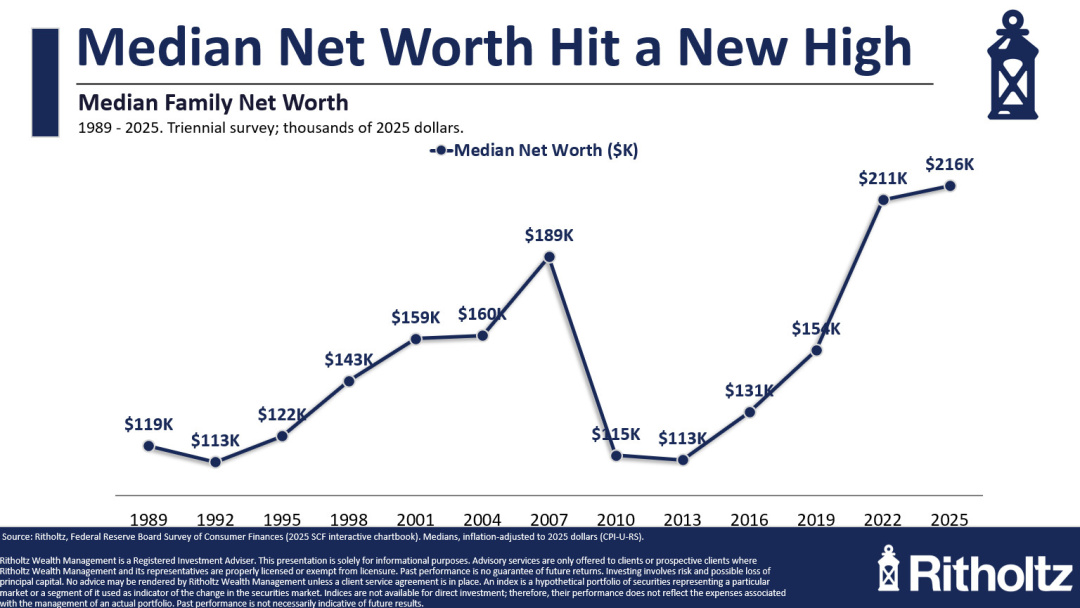
This trend reflects a labor market that has shifted in favor of workers, particularly in the services sector, where employers have increased wages and offered bonuses to attract talent. Additionally, real median net worth rose by 2 percent, reaching nearly $216,000, with most families across various income and wealth groups reporting increases.
However, the report also highlights that changes in wealth have reinforced existing patterns of inequality. Families that typically have less wealth, such as young families, renters, and those without a high school diploma, saw declines in their median and mean wealth. Conversely, high-income households, older families, and asset owners enjoyed some of the largest wealth gains.
The Federal Reserve's triennial Survey of Consumer Finances, released on October 9, surveyed over 4,000 households to provide a snapshot of U.S. families' financial conditions. The findings align with a positive report from the Census Bureau regarding U.S. households.
Asset ownership, including stocks and real estate, has played a significant role in the increase of net worth. The homeownership rate remained steady at 66 percent, with homeowners' median net housing value rising to $230,000 last year, up from below $219,000 in 2022. Existing home prices have surged in recent years, driven by pandemic-era low interest rates, which have led many homeowners to remain in their properties rather than sell.
While stock market ownership decreased to 56 percent in 2025, median holdings increased by 36 percent to nearly $78,000. Participation in retirement plans also rose, with median balances climbing.
Despite these gains, household debt remains a concern. The proportion of families carrying any debt has remained stable at 77 percent, with median balances unchanged. The share of families with credit card debt has held steady at 45 percent, while the median balance has risen slightly from $150 to $3,100.
Debt stress levels appear to be increasing, with the ratio of debt payments to income exceeding 40 percent rising from 6.5 percent to nearly 9 percent, marking the highest level in over a decade. The percentage of families reporting difficulties in meeting loan payments has also increased, rising to 20 percent from 12 percent in 2022.
The report notes that borrowers may appear less financially vulnerable when their debts are assessed in relation to their assets rather than their income. However, the likelihood of families falling behind on financial obligations has worsened since 2022, reaching levels not seen since the 2010 survey.
As interest rates continue to rise, managing these debts may become increasingly challenging for borrowers. Additionally, the report highlights the growing trend of buy-now, pay-later loans, which accounted for nearly all the increase in families with installment loans in 2025. The percentage of families with a balance on a BNPL plan rose to 12 percent, up from 7 percent in 2022. A June paper by Federal Reserve economists estimated that BNPL providers originated approximately $160 billion in consumer credit products.