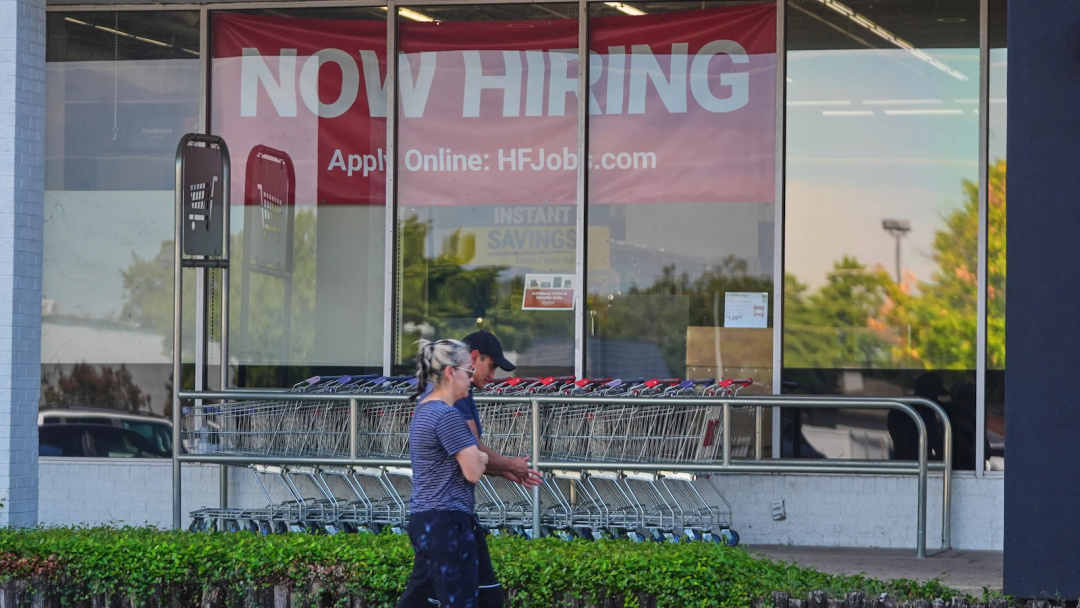
Jobless Claims Hit Lowest Level Since 1969 in First Half of 2026

The first half of 2026 has marked a significant milestone in the labor market, with jobless claims reaching their lowest levels since 1969. Weekly initial claims were reported at 215,000, while the average for the first six months stood at approximately 213,000. This is particularly noteworthy given that the workforce today is more than double the size it was during that period, which was characterized by a tight labor market and the Vietnam War draft affecting civilian employment.
In comparison to previous years, even during the pre-pandemic expansion of the Trump administration, jobless claims did not dip this low over a six-month span. While there were lower claims during the post-pandemic hiring boom of 2022 and 2023, that period was considered atypical. The current low level of layoffs, indicated by jobless claims, contradicts the narrative that artificial intelligence is leading to widespread job losses.
Market Reading & Resources
Sponsor funding complete. Trade on.
Despite claims of a "low hire, low fire" environment, the economy has added 3.1 million jobs since January, with a net increase of 392,000 jobs after seasonal adjustments, even accounting for a loss of 157,000 jobs in February. The healthcare sector has played a crucial role in this stability, now comprising about 15 percent of all nonfarm payrolls, up from 13.2 percent in 2016. Since January 2025, healthcare has added approximately 410,000 seasonally adjusted jobs, contributing significantly to the overall job growth.
Data from the Labor Department's Job Openings and Labor Turnover Survey indicates that layoff rates in healthcare and social assistance remain exceptionally low, with a current layoff rate of 0.9 percent, compared to an economy-wide rate of 1.2 percent. As more workers transition into jobs that are less susceptible to downsizing, the overall layoff rate continues to decline.
Several factors contribute to the current job stability. The restoration of border security has limited the influx of new workers, enhancing the value of the existing labor force. Many businesses are allowing retirements to adjust workforce sizes, reducing the need for layoffs. Additionally, productivity gains and strong corporate profits have made retaining employees more advantageous for companies. Changes in trade policy have also alleviated pressure to outsource jobs.
Looking ahead, these trends are unlikely to shift significantly unless there is a major political change favoring globalism and open borders. The aging population is expected to sustain demand for healthcare jobs, further contributing to job security in this sector.