Bitcoin Approaches $85,000 Amid Conflicting Inflation Signals
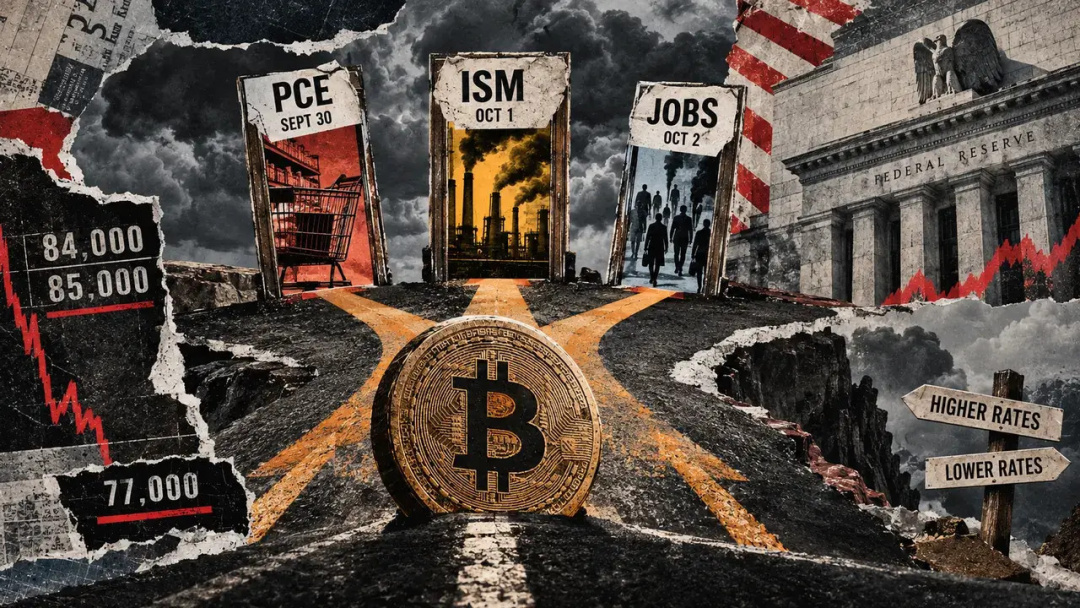
Bitcoin experienced an intraday low of $82,563 on September 28, falling just below the purchase prices identified by long-term holders, according to analysis from Glassnode. The upcoming release of three significant US economic reports threatens to send mixed signals regarding inflation and labor market conditions, which are crucial for shaping interest rate expectations. On September 30, the personal income and outlays report will provide insights into August's economic performance, followed by the ISM manufacturing survey on October 1 and the September employment report on October 2.
A favorable consumer inflation reading could emerge just before a less reassuring report on factory input costs, creating a complex scenario for traders who may need to adjust their perceptions of the Federal Reserve's future actions. Glassnode's analysis from September 23 highlighted a significant cluster of long-term holder supply around the $84,000 to $85,000 range, indicating that Bitcoin's ability to reclaim this level could reflect market reactions to the week's economic news.
Market Reading & Resources
Sponsor funding complete. Trade on.
Additionally, Glassnode identified a deeper True Market Mean reference at approximately $77,000 and an overhead mean MVRV reference near $96,700. Their Market Pulse report from September 21 noted an increase in net spot buying, rising trading volume, and elevated futures leverage, alongside weekly outflows from ETFs. A combination of fresh spot buying, stronger volume, and ETF demand could lend more credibility to a potential rebound than futures covering alone.
The Energy Information Administration reported that Brent crude oil averaged $91 per barrel in August, which is $7 higher than in July, as exports from the Middle East remained constrained. The International Energy Agency also reported significant restrictions on Gulf diesel and gasoil exports in August, contributing to rising crude prices.
The September 30 PCE report will not capture the later developments in fuel, freight, and factory costs, as evidenced by the International Maritime Organization's reports of vessel damage in the Hormuz region on September 21 and 23, indicating ongoing shipping risks.
If investors anticipate that higher business costs will sustain elevated inflation, Treasury yields and the expected path of the Federal Reserve could increase before consumer inflation reports reflect any changes. A soft PCE reading for August could initially relieve some pressure, but it would not resolve the uncertainties surrounding subsequent economic conditions.
The ISM's August report indicated a Prices Index of 71.1 and Supplier Deliveries at 59.3, suggesting slower delivery times. The report also highlighted rising prices for diesel fuel and freight, with respondents mentioning energy costs and the conflict in Hormuz.
A higher Prices reading for September, coupled with slower delivery times or cost concerns, would signal renewed pressure on manufacturers. The upcoming JOLTS report on September 29 will provide an early check on labor conditions, while the September payrolls report on October 2 will more directly assess economic growth.
The Federal Reserve raised its target range to 3.75% to 4% on September 16, citing persistent inflation and steady job gains. A moderate cooling in job growth could alleviate some rate pressure, while a significant downturn could raise concerns about economic growth.
The most telling scenario this week would involve a soft August PCE reading followed by a higher Prices reading in the September ISM report. An initial rally in Bitcoin could reverse if yields and rate expectations increase again. The critical test for Bitcoin will be whether each new economic reading influences yields and Fed expectations, and whether spot buyers can support movements through the established price levels identified by Glassnode.