Current Economic Landscape: Inflation, Interest Rates, and Labor Market Trends
The current economic landscape presents a mix of challenges and opportunities. Mortgage rates have surpassed 7%, while the unemployment rate remains low at 4%. Fixed income investors are now seeing yields of around 5% on high-quality bonds and 4% on cash, with these rates rising rapidly. Consumers are grappling with high oil prices, leading to an inflation rate of 3.4%, which is above the Federal Reserve's target and has prompted recent interest rate hikes.
Despite these inflationary pressures, the stock market is performing well, nearing all-time highs. However, consumer sentiment is notably low, indicating a disconnect between market performance and public perception. The Federal Reserve is likely to continue raising interest rates due to persistent inflation and strong economic growth, with the Atlanta Fed forecasting a real GDP growth of 5% for the third quarter.
Market Reading & Resources
Sponsor funding complete. Trade on.
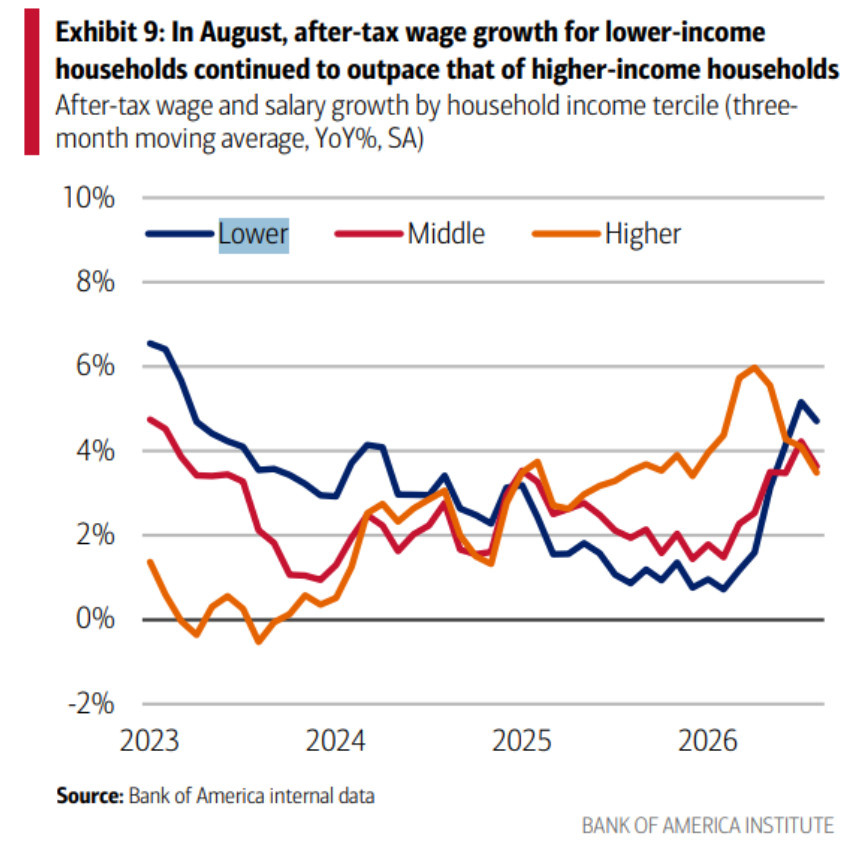
The labor market is also showing signs of improvement, with initial unemployment claims down by 12% over the past year and continuing claims down by 11%. Wage growth is accelerating for lower and middle-class workers, even as fears about job displacement from artificial intelligence persist. This improvement in the labor market is occurring alongside a low unemployment rate, which adds to the complexity of the current economic situation.
Historically, rising interest rates are expected to negatively impact risk assets, particularly long-duration securities like stocks. However, the market has defied these expectations, with the S&P 500 rising nearly 210% since the lows of March 2020, despite a significant increase in interest rates. This remarkable performance can be attributed to government spending, the influence of AI on the market, and a robust tech bull market.
Conversely, long-term bonds have suffered significantly due to rising rates, marking a challenging period for fixed income investments. The current economic environment is characterized by both clarity and confusion, as noted by investor Charlie Munger, who remarked that confusion often indicates a lack of understanding of the prevailing circumstances. As the economy continues to evolve, it remains to be seen how these dynamics will play out in the coming months.