Rising Diesel Prices Pose Inflation Risks for Bitcoin Investors
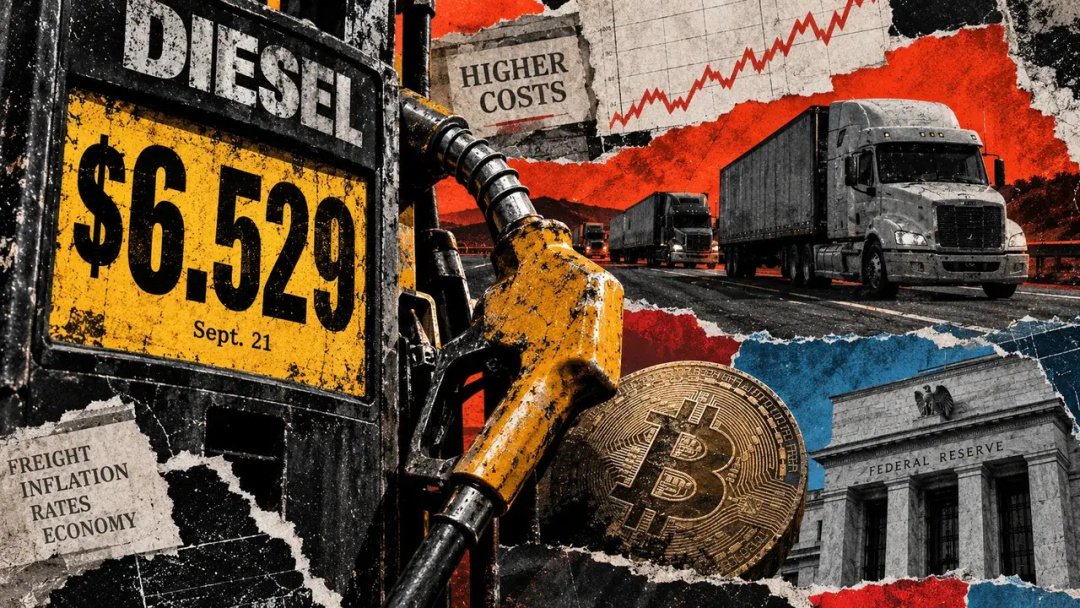
The price of US on-highway diesel surged to $6.529 a gallon on September 21, reflecting an increase of 24.4 cents within a week, according to the Energy Information Administration (EIA). This rise presents a potential inflation risk for Bitcoin investors who are closely monitoring the implications of elevated freight costs. The EIA had previously labeled the lower price from September 14 as a record in nominal dollars, making the recent figure another nominal high, which refers to the price at the pump without adjusting for inflation.
Additionally, the fuel buffer has diminished, with EIA data indicating that US distillate stocks fell to 107.431 million barrels for the week ending September 18, down from 107.859 million barrels the previous week. This decline, reported on September 23, underscores the evidence of constrained supply. The EIA attributes the recent surge in diesel prices to tight global distillate supply and high crude prices. Since diesel is essential for freight movement, elevated prices could lead to increased shipping costs on both road and rail.
Market Reading & Resources
Sponsor funding complete. Trade on.
The extent to which companies will transfer these costs to consumers depends on various factors, including contracts, competition, and the duration of the fuel price increase. A sustained rise in freight costs could pose a more significant inflation risk than a temporary spike.
Earlier data from the Bureau of Labor Statistics (BLS) highlighted the importance of monitoring this channel. In August, diesel fuel producer prices rose by 24.1% compared to July, while the truck freight transportation price index increased by 2.0%. These increases occurred prior to the latest retail diesel record, indicating upstream price pressures.
The potential impact on Bitcoin is linked to inflation and interest rate expectations. If high fuel and freight costs contribute to persistent inflation, investors may anticipate that the Federal Reserve will maintain higher interest rates for an extended period, which could negatively affect assets sensitive to financing conditions. The Fed raised its target range to 3.75%–4% on September 16, citing elevated inflation, a decision made before the recent diesel price increase.
The latest consumer price index (CPI) report, covering August, indicated a 0.4% rise from July. Upcoming reports will be critical in determining the inflationary effects of the diesel price surge. The BLS is set to release the September CPI on October 14 and producer prices on October 15, while the Bureau of Economic Analysis (BEA) will publish September Personal Income and Outlays, including PCE price data, on October 29. Should diesel prices decline or if freight and consumer prices show limited pass-through effects, the argument for a lasting inflation impulse may weaken.