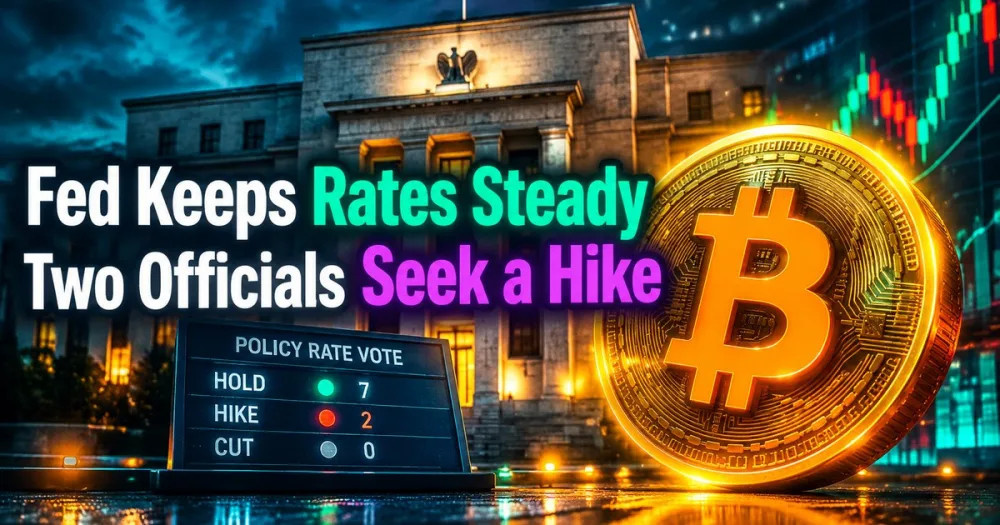
Federal Reserve Considers Rate Hikes Amid Rising Inflation Concerns
The Federal Reserve is reevaluating its monetary policy stance as inflation persists at 4.1%, prompting discussions about potential interest rate hikes. Recent FOMC minutes from March and April indicate that officials are increasingly concerned about inflation driven by tariffs, high oil prices, and significant corporate investments in AI infrastructure. The PCE index, the Fed's preferred measure of inflation, has not shown the expected decline, leading to a sense of urgency among policymakers.
Tariffs are estimated by the Dallas Fed to contribute approximately 0.9 percentage points to core inflation, indicating that trade policies are significantly impacting consumer prices. The April PCE reading of 3.8% year-over-year was largely influenced by rising energy costs, which have continued to escalate into May. These higher fuel prices affect various sectors, from shipping to food production, creating widespread inflation that is troubling for central bankers.
Market Reading & Resources
Sponsor funding complete. Trade on.
Minneapolis Fed President Neel Kashkari has highlighted the connection between the substantial investments in AI infrastructure by major tech companies and inflationary pressures. As these companies compete to build data centers and acquire GPUs, they create increased demand in construction, energy, and specialized labor markets, further complicating the Fed's efforts to manage inflation.
St. Louis Fed President Alberto Musalem has been vocal about the possibility of a rate hike if inflation does not show signs of cooling. Under Chair Kevin Warsh, market expectations have shifted dramatically from hopes of rate cuts in late 2025 to predictions of at least one 25 basis point hike by the end of 2026. Some analysts are even forecasting cumulative hikes of up to 75 basis points.
The FOMC minutes from recent meetings have explicitly linked rising oil prices and tariffs to the inflationary pressures being monitored by officials. Unlike demand-driven inflation, tariff-induced price increases do not respond to interest rate changes, which complicates the Fed's decision-making process. The central bank is weighing the risks of acting too aggressively against the dangers of allowing inflation expectations to become unanchored.
Historically, Bitcoin and other cryptocurrencies have reacted sensitively to shifts in Fed policy. The tightening cycle in 2022 significantly impacted crypto valuations, as higher interest rates tend to reduce liquidity and increase the appeal of safe-haven assets, dampening speculative interest in cryptocurrencies.
As of mid-2026, markets are anticipating a significant likelihood of at least one 25 basis point hike by year-end. Should inflation continue to accelerate, the projected cumulative hikes could become the new baseline. The focus on AI-driven demand as a potential inflationary concern adds another layer of complexity, potentially creating a feedback loop where the growth in certain crypto sectors justifies tighter monetary policy that affects the entire crypto market.