DeFi's $20 Billion Surge: Analyzing the Impact of Price Inflation
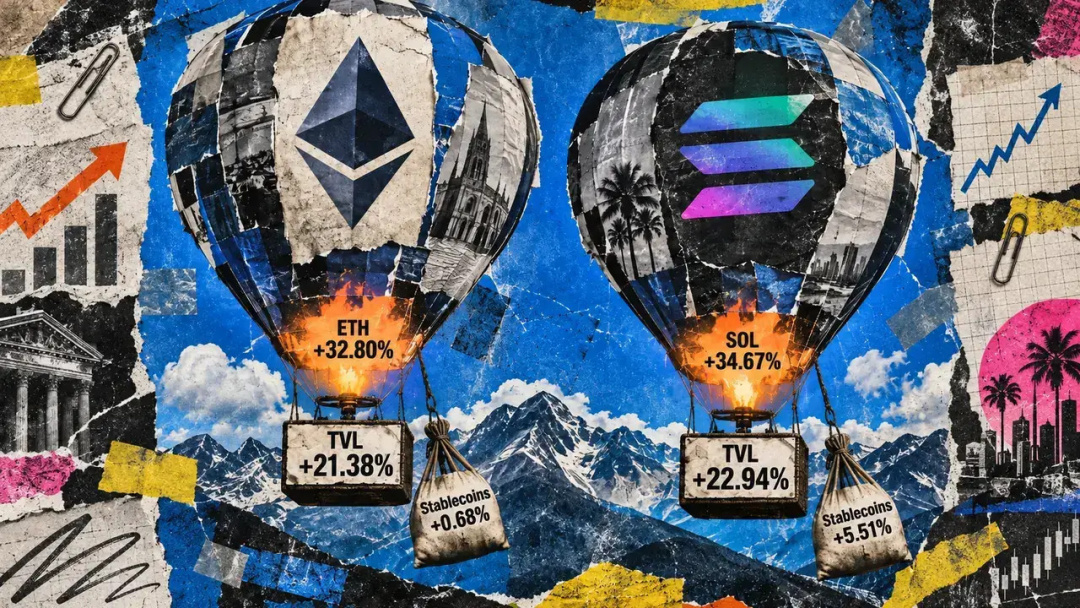
The recent rebound in decentralized finance (DeFi) has prompted questions about whether the increase in total value locked (TVL) is due to fresh liquidity or merely a reflection of rising asset values. As of September 15, data from DeFiLlama revealed that Ethereum's TVL increased by 21.38% over the past month, while Solana's rose by 22.94%. In contrast, the growth of stablecoins was much more modest, with Ethereum's stablecoin market cap rising by only 0.68% and Solana's by 5.51%. Overall, the aggregate across all chains saw a mere 1.59% increase in stablecoin market cap.
The native assets of these platforms, however, experienced significant gains, with Ethereum (ETH) appreciating by 32.80% and Solana (SOL) by 34.67%) during the same period. This disparity suggests that the increase in TVL may be largely attributed to the revaluation of assets rather than an influx of new capital. DeFiLlama defines TVL as the dollar value of assets held in protocol contracts, influenced by both the quantity of deposited assets and their market prices. A rise in token prices can inflate the dollar value of TVL even if the actual amount of assets remains unchanged.
Market Reading & Resources
Sponsor funding complete. Trade on.
Another metric to consider is USD Inflows, which measures changes in token balances at market prices, providing a clearer picture of net asset movement. This metric differs from the stablecoin market cap, which tracks the value of stablecoins on a chain, some of which may not be utilized within DeFi protocols.
The current data indicates that the price gains of ETH and SOL have outpaced their respective TVL increases by over 11 percentage points, suggesting that asset revaluation is the primary driver of the recent surge. While there may still be new capital entering the market, the evidence points towards a valuation-led rebound.
In lending markets, mechanisms such as Aave allow supplied assets to be used as collateral while borrowers receive tokens for other uses. On Solana, products like Kamino facilitate collateralized borrowing, which can enhance liquidity. However, to fully understand the contributions of these mechanisms, detailed data on borrowing and position metrics would be necessary.
DeFiLlama's methodology filters out several sources of inflated TVL, such as native staking and bridge-project TVL, ensuring a more accurate representation of the capital at play. Nevertheless, the complexities of cross-protocol composability and bridging can obscure the true location of capital, as assets may be locked or represented across different chains.
A liquidity-driven recovery would manifest in more than just higher dollar TVL; it would also involve price-adjusted token balances rising across protocols, sustained stablecoin growth, and net bridge inflows contributing to local liquidity. Until such indicators are confirmed, the current data suggests that price appreciation is doing much of the heavy lifting in the DeFi market.
As of now, Ethereum's price has dipped by 3.74% in the past 24 hours, maintaining its position as the second-largest cryptocurrency by market cap.