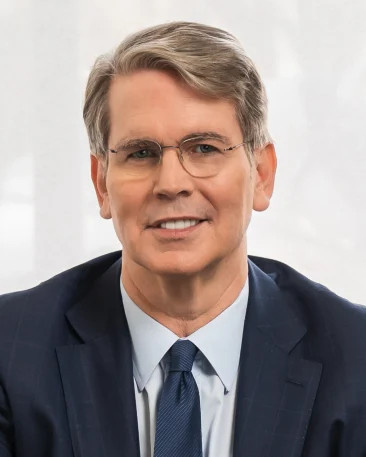
Treasury Secretary Scott Bessent Faces Challenges Amid Rising Treasury Yields
Treasury Secretary Scott Bessent is facing significant challenges as he prepares to testify before the House Financial Services Committee. The backdrop to his testimony is the recent rise in Treasury yields, with the 10-year yield crossing the 5% mark for the first time since 2023. This increase in yields, coupled with a national debt that has ballooned to $40 trillion, complicates Bessent's role and the fiscal landscape.
In response to these pressures, the Treasury has doubled its bond buyback operations, increasing the scale from $2 billion to at least $4 billion per operation. In some instances, acceptance limits have been raised to between $5.2 billion and $6 billion. The rationale behind these buybacks is to repurchase older, less liquid bonds to enhance market functioning and theoretically exert downward pressure on yields. However, yields have consistently rebounded following these interventions, raising concerns about their effectiveness.
Market Reading & Resources
Sponsor funding complete. Trade on.
Stanley Druckenmiller, a prominent macro investor and Bessent's former mentor, has criticized the expansion of buybacks, calling it a "mistake" that undermines market fundamentals. The current economic environment, characterized by annual deficits nearing $2 trillion, has led bondholders to demand higher compensation for the risks associated with holding U.S. government debt. The 30-year Treasury yield has also frequently tested or surpassed the 5% threshold in recent weeks.
The implications of rising Treasury yields are far-reaching, affecting mortgage rates, corporate borrowing costs, and auto loans. When the 10-year yield exceeds 5%, the cost of capital increases for a wide range of borrowers, from large corporations refinancing their debts to first-time homebuyers seeking favorable mortgage rates.
During his upcoming testimony, Bessent is expected to address a variety of pressing topics, including inflation, energy prices, and the policies of the Federal Reserve. He has noted that the unemployment rate currently stands at 4.1%, with wages for lower earners rising at a faster pace than those for higher earners. As Bessent navigates these complex issues, the scrutiny from lawmakers will likely reflect the broader economic concerns facing the nation.