Asian Markets Mixed as AI Stocks Decline and Oil Prices Rise
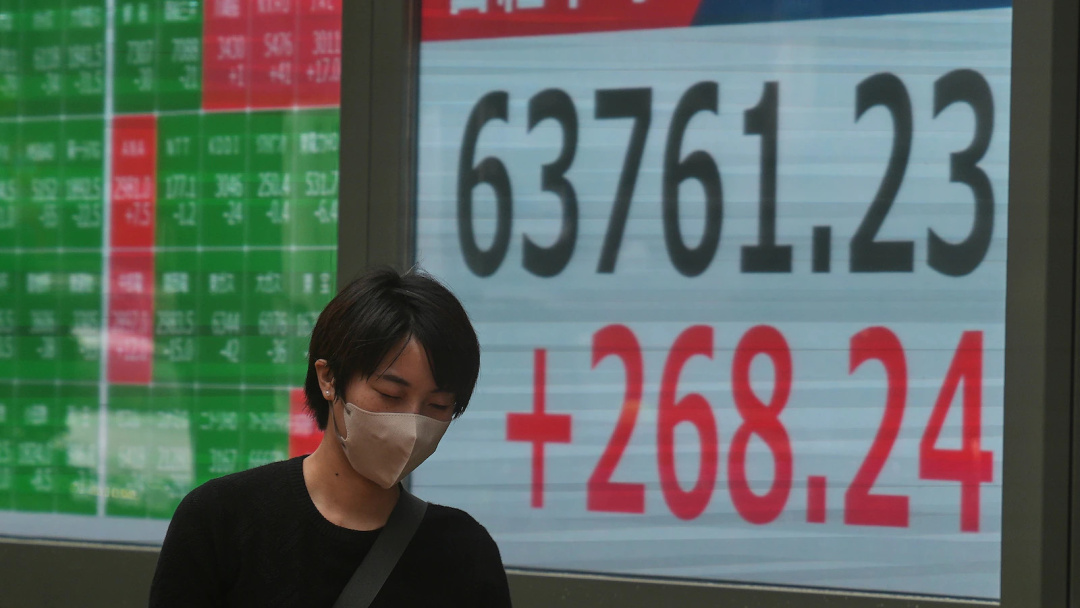
Asian shares were trading mixed early Tuesday following a decline in artificial intelligence stocks. Japan's benchmark Nikkei 225 rose by 0.8% in morning trading, reaching 63,993.22. Softbank Group, a significant investor in OpenAI, saw its shares jump over 8%, recovering from previous losses. This surge followed comments from OpenAI's CEO Sam Altman, who indicated that the company would likely delay its stock sale until next year, impacting potential cash inflows for Softbank and other investors.
In contrast, Australia's S&P/ASX 200 fell by 0.9% to 8,672.10, while South Korea's Kospi remained relatively unchanged, dipping less than 0.1% to 6,681.32. Hong Kong's Hang Seng index decreased by 0.2% to 24,879.69, and the Shanghai Composite added a slight 0.1%, reaching 3,889.95.
Market Reading & Resources
Sponsor funding complete. Trade on.
Market sentiment was further influenced by industry leaders advocating for a slowdown in AI development to ensure safety. Analyst Ng Jing Wen from Mizuho Bank noted the uncertainty surrounding a coordinated slowdown, given the fierce competition among U.S. firms and between the U.S. and China.
Despite the pressure on AI stocks, gains in other sectors helped mitigate losses on Wall Street. The Dow Jones Industrial Average fell by 152 points, or 0.3%, while the Nasdaq composite dropped 0.6% after recovering from an earlier loss of 1.3%.
Concerns about inflated AI stock prices have persisted, especially after Anthropic CEO Dario Amodei called for a global slowdown in AI development, citing safety risks. Nvidia, a key player in AI chip production, saw its shares decline by 3.4%, contributing significantly to Wall Street's losses. SpaceX also experienced a 2% drop following Elon Musk's agreement with Amodei's cautionary stance.
In energy markets, benchmark U.S. crude rose by 1.36% to $102.77 a barrel, while Brent crude increased by 1.17% to $106.92 a barrel. The rise in oil prices is attributed to ongoing conflicts in the Middle East, which have disrupted global crude supplies. A crucial Saudi oil pipeline is expected to be out of service for weeks due to recent attacks, affecting export routes.
The yield on the 10-year Treasury note briefly surpassed 5.00% for the first time in nearly three years before retracting to 4.98% as oil prices stabilized. In currency trading, the U.S. dollar strengthened against the Japanese yen, rising to 154.81 from 154.30, while the euro decreased to $1.1537 from $1.1557.