Vanguard Value ETF Outperforms Growth Counterpart by 11 Points in 2026
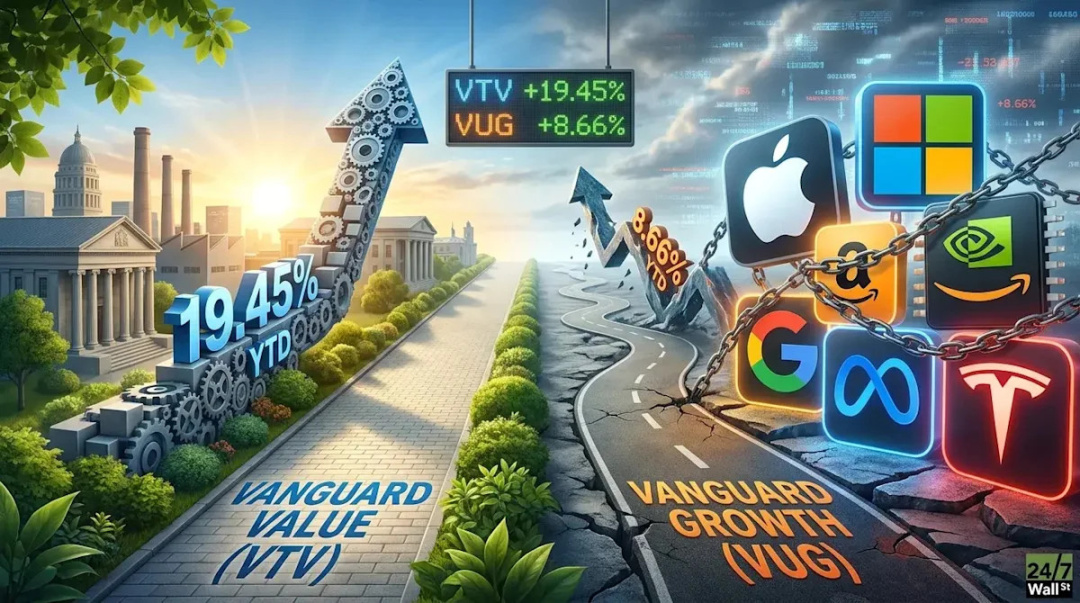
In 2026, the Vanguard Value ETF (NYSEARCA:VTV) has demonstrated remarkable performance, outperforming its sibling, the Vanguard Growth ETF (NYSEARCA:VUG), by a substantial 11 percentage points. As of September 9, 2026, VTV has recorded a year-to-date return of 19.45%, while VUG has only managed an 8.66% increase. Both funds share the same issuer and expense ratio of 0.03%, yet their performance diverges due to their respective stock holdings.
The Vanguard Growth ETF is heavily weighted in the so-called Magnificent Seven stocks, including major players like NVIDIA, Apple, and Microsoft. In contrast, VTV does not hold any of these stocks, which has allowed it to avoid the pitfalls associated with their recent underperformance. This difference in composition is crucial for investors who may be overexposed to these tech giants through other investments.
Market Reading & Resources
Sponsor funding complete. Trade on.
The performance gap is not just a short-term anomaly. Over the past year, VTV has returned 26.42%, while VUG has only achieved a 14.09% return. This trend suggests that value investing is regaining traction after a period of underperformance relative to growth stocks.
For investors nearing retirement, VTV offers a more diversified exposure to large-cap U.S. equities without the concentration risk associated with the Magnificent Seven. Additionally, VTV has provided a higher distribution yield, paying $4.09 per share compared to VUG's $1.58, which may appeal to income-focused investors.
Despite its recent success, value investing can lag during growth periods, and the absence of megacap stocks in VTV may have hindered its performance during the tech boom from 2020 to 2023. However, as market dynamics shift, VTV's strategy of diversifying away from these concentrated bets may prove advantageous.
Investors should also consider the tax implications of their ETF holdings. Selling appreciated shares of VUG could trigger capital gains taxes, while reallocating funds to VTV may provide a more tax-efficient strategy. This is particularly relevant for those managing taxable accounts.
In summary, the Vanguard Value ETF's performance this year highlights the importance of portfolio diversification and the potential risks of overconcentration in a few high-performing stocks. For those looking to adjust their investment strategy, moving some funds from VUG to VTV could be a prudent decision, especially in light of the current market conditions.