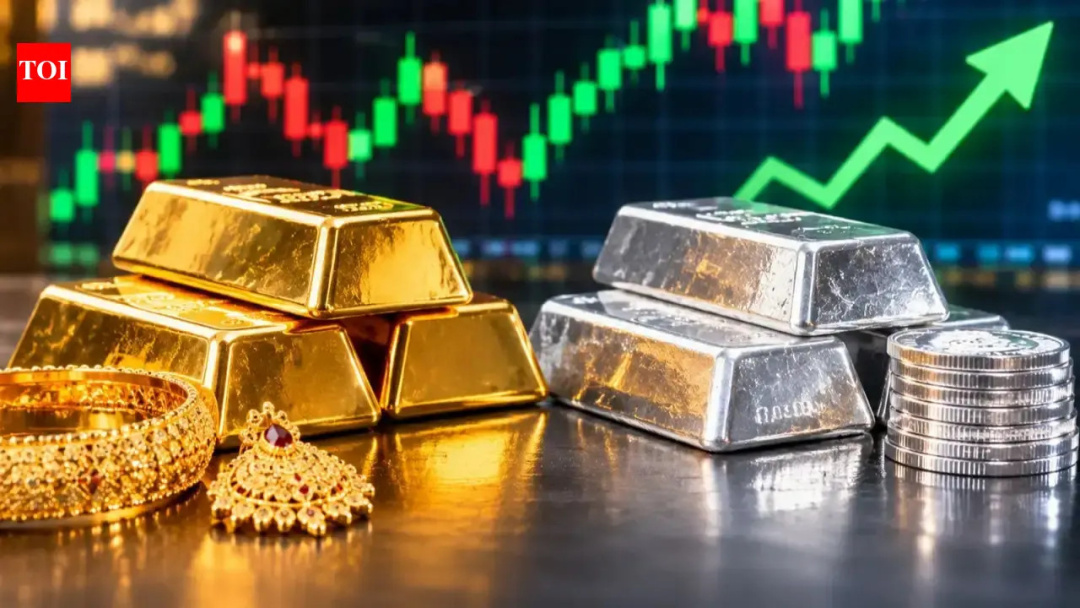
Gold Prices Drop to One-Week Low Amid Strong Dollar and Rising Oil

Gold prices have extended their losses, reaching a one-week low as a stronger US dollar and rising crude oil prices have dampened investor appetite for the precious metal. Spot gold eased by 0.1% to $4,100.32 per ounce, marking its weakest level since July 2. Meanwhile, US gold futures for August delivery fell by 1.1% to $4,112.50 per ounce. The decline follows US military strikes on Iran, which have driven up oil prices and raised concerns about persistent inflationary pressures. Higher inflation expectations have led to fears that the US Federal Reserve may maintain elevated interest rates for a longer period, diminishing the appeal of non-yielding assets like gold. As a result, investors have adopted a cautious stance, leading to pressure on bullion despite ongoing geopolitical uncertainties.
Internationally, gold prices also faced downward pressure, with spot gold declining nearly 0.6% and silver dropping around 2%. Analysts have linked this decline to a rebound in crude oil prices following attacks on shipping routes in the Strait of Hormuz. Rising crude prices have fueled inflation concerns and increased both US Treasury yields and the dollar index. Since gold is priced in dollars, a stronger dollar makes the metal more expensive for international buyers, thereby reducing demand. Additionally, higher bond yields have made gold less attractive as investors can secure better returns from fixed-income assets.
Market Reading & Resources
Sponsor funding complete. Trade on.
Market participants are largely remaining on the sidelines as they await several significant economic events from the United States. The upcoming release of the Federal Reserve's June meeting minutes, the second round of US-Iran peace talks, and key employment and inflation data are expected to provide new direction for gold prices. Investors typically avoid taking aggressive positions before such high-impact events, as monetary policy expectations directly influence bullion demand. Since gold does not yield interest income, expectations of higher interest rates generally reduce its appeal. Analysts have noted that traders are adopting a cautious approach, contributing to the weakness in bullion prices as they await greater clarity from upcoming economic data.
In the domestic market, gold prices have seen a steep decline, with the price of 99.9% purity gold falling by Rs 1,400 to Rs 1,49,250 per 10 grams from the previous session. Silver also decreased, shedding Rs 200 to Rs 2,39,800 per kilogram. Analysts attribute this decline to a combination of a stronger rupee and weakness in global bullion markets. A stronger domestic currency makes imported gold cheaper, thereby reducing local bullion prices. This decline reflects cautious investor sentiment ahead of key global events that are expected to influence precious metal prices. The drop in both gold and silver highlights how currency movements can significantly impact domestic bullion even when international fundamentals remain mixed.