India's Middle Class Crisis Fuels Protests Over Unemployment and Polarization
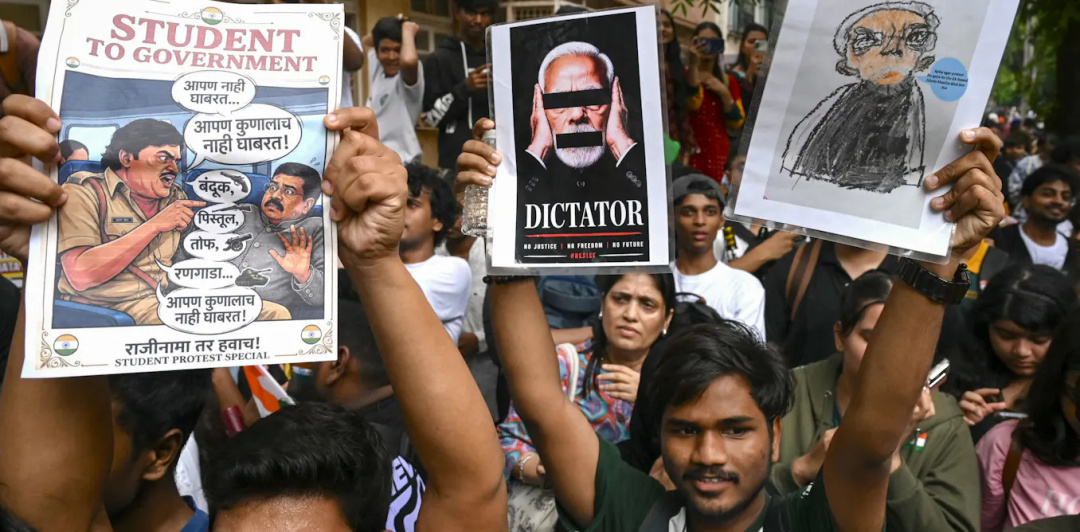
The ongoing student protests in India can largely be attributed to the crisis affecting the Indian middle class, particularly characterized by high graduate unemployment and a decline in average purchasing power. The disparity has grown as the upper middle class has become wealthier, while the lower middle class has seen its economic situation worsen.
Until the mid-2010s, the expansion of India's middle class seemed inevitable, driven by double-digit growth from 2004 to 2014 under Prime Minister Manmohan Singh. This period saw the emergence of a new social group of corporate executives, engineers, and IT professionals, defined by their income and consumption capacity. However, the criteria for measuring this class have varied widely, complicating assessments of its growth.
Market Reading & Resources
Sponsor funding complete. Trade on.
In the 2010s, estimates suggested a significant rise in the middle class, with the NCAER estimating around 142 million people in this category by 2012. However, by 2017, the Pew Research Center reported only 108 million Indians as middle class, indicating stagnation in real incomes and a lack of significant growth.
Persistent inflation, particularly in food prices, and weak income growth have contributed to this stagnation. Real urban income showed virtually no growth between 2017 and 2023, with many sectors experiencing declines in real wages. This has led to a growing internal differentiation within the middle class, where some households have ascended to the economic elite while many others have regressed.
Data from the World Inequality Lab reveals a stark concentration of income, with the richest 10% holding 57.7% of national income in 2022, while the share of the poorest 50% has dropped significantly. Consumption patterns reflect this polarization, with the poorest urban households spending less than 5,000 rupees monthly, while the wealthiest 5% spend over four times that amount.
Despite official growth rates hovering around 7 to 8 percent since 2014, this growth has not translated into an expansion of the middle class. The recovery post-pandemic has been described as “K-shaped,” benefiting the wealthy while leaving the working and middle classes behind. In 2024, three-quarters of Indians earned less than 15,000 rupees per month, highlighting the disparity.
Young graduates face particularly high unemployment rates, with the International Labor Organization reporting a rate of 29.1% among graduates in 2024. This mismatch between graduates' expectations and employers' needs has led many to decline low-paying jobs, exacerbating the crisis. The IT sector, once a beacon of growth, is also experiencing a slowdown, with major companies reducing their workforces amid rising automation and AI.
Overall, the middle class in India is not experiencing the linear growth once anticipated but is instead facing significant polarization. The elite are prospering, while the lower middle class becomes increasingly vulnerable, leading to social unrest among the youth, particularly those from Gen Z who are now taking to the streets in protest.