Jim Cramer Highlights Investment Potential of the Magnificent Seven Tech Stocks
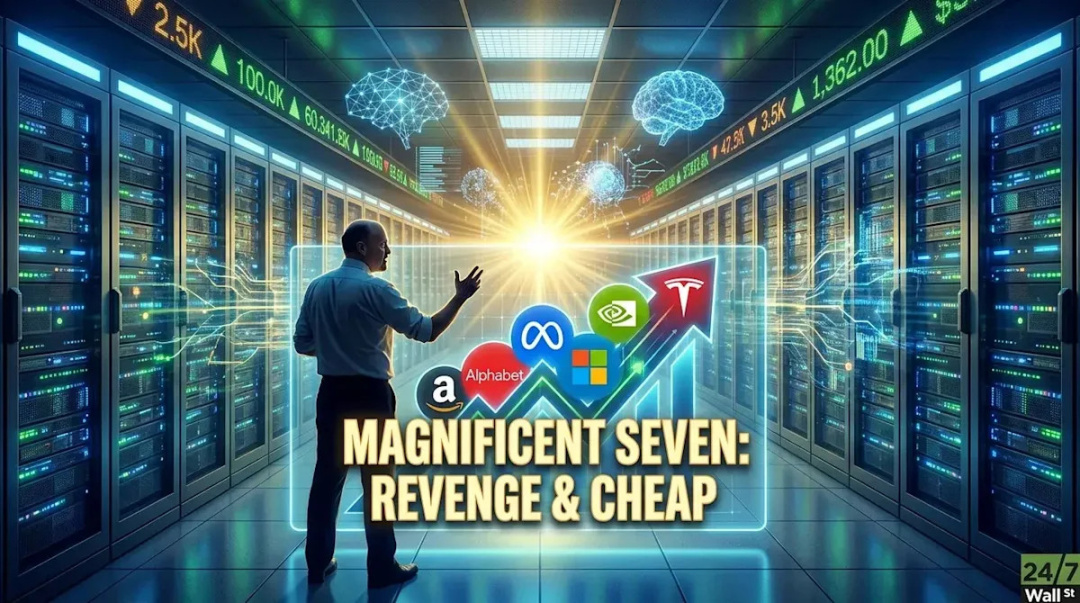
Jim Cramer has recently pointed out that the Magnificent Seven tech stocks may represent a generational buying opportunity, although he notes that this assertion applies selectively among the group. On September 3, 2026, during a segment on CNBC, Cramer stated, "we’re witnessing the revenge of the Magnificent Seven, and most people don’t even seem to know it." He argues that these companies have reached a price point that makes them attractive investments, but the reality is more nuanced.
Cramer highlights that these companies are heavily investing in AI infrastructure, which has not yet been fully recognized by the market. The success of these investments will hinge on whether they translate into significant free cash flow growth. If they do, current stock prices may appear favorable in hindsight; if not, the market may be correctly pricing in potential capital destruction.
Market Reading & Resources
Sponsor funding complete. Trade on.
Among the companies discussed, Cramer mentions Apple, Amazon, Alphabet, Meta, Microsoft, Nvidia, and Tesla. He describes Amazon and Meta as having become "forlorn losers" in the eyes of investors, despite their substantial investments in AI. For instance, Meta Platforms is projected to spend between $130 billion and $145 billion on capital expenditures in 2026, while its free cash flow has dramatically decreased from $8.55 billion to just $784 million year-over-year. Similarly, Amazon reported a trailing free cash flow of negative $7.6 billion against a backdrop of $53.1 billion in capital expenditures.
Cramer believes that these investments will eventually yield returns, citing Amazon Web Services (AWS) as a key growth driver, which saw a 37% year-over-year increase, reaching $42.23 billion. He argues that the long-term potential of these investments justifies the current valuations, particularly for companies like Alphabet, which trades at a trailing P/E of 17x, while its Google Cloud division is experiencing significant growth.
However, Cramer also raises questions about the sustainability of search economics in the face of AI advancements, particularly regarding Alphabet's future. He suggests that Alphabet's recent user growth indicates it may be adapting well to these changes.
Cramer concludes that while he sees potential in Alphabet and Amazon, he views Microsoft and Nvidia as fairly valued, and he expresses skepticism about Meta's ability to overcome its legal challenges. Tesla, with its high P/E ratio, is seen as a more speculative investment within this group.
The critical test for these companies will be whether their capital expenditures can convert into free cash flow growth over the next year. If AWS and Google Cloud can maintain their margins while increasing depreciation, Cramer's bullish outlook may prove correct. Conversely, if margins compress, the market's cautious stance may be justified.