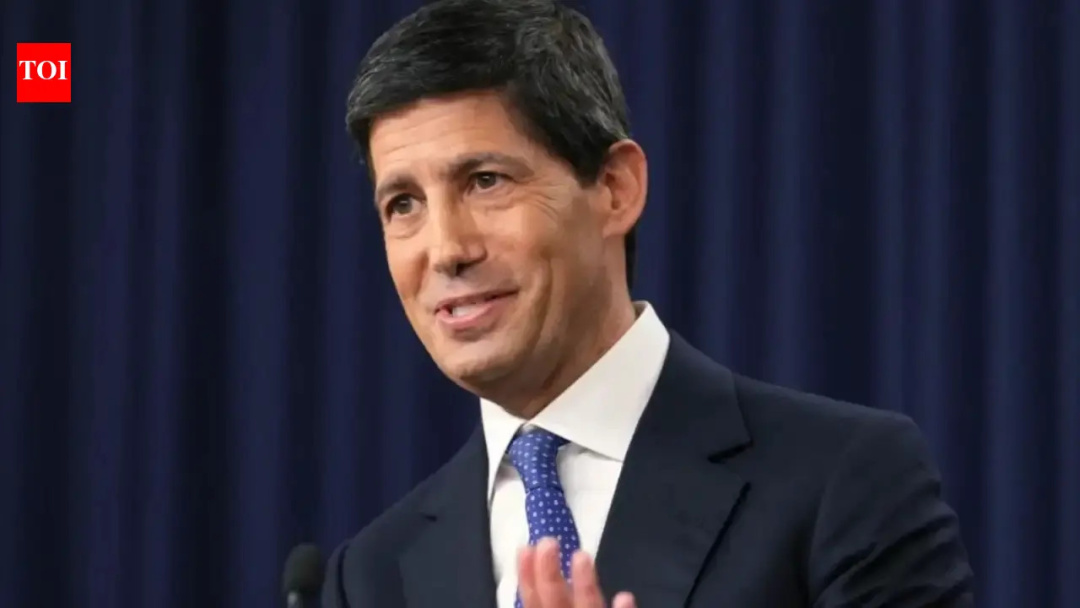
Scott Bessent Discusses Federal Reserve Policy Amid Supply Shock Concerns

Treasury Secretary Scott Bessent has reiterated the significance of respecting institutional boundaries in Washington, particularly regarding the Federal Reserve's independence. In recent statements, he has made it clear that he will not speculate on the Fed's future actions, while also highlighting that increasing interest rates during a supply shock is an unusual policy decision.
Bessent, who took office as the 79th US Treasury Secretary on January 28, 2025, has established a reputation for non-interference with Federal Reserve policy. In a February 2025 interview with Bloomberg TV, he stated unequivocally, "Prospectively, monetary policy, I will not comment on. There will be no criticism."
Market Reading & Resources
Sponsor funding complete. Trade on.
This stance marks a significant shift from the previous administration, which often pressured the Fed to lower rates publicly. However, Bessent's latest remarks introduce a nuanced perspective. By indicating that hiking rates during a supply shock is "unusual," he is making a commentary on economic norms without crossing his self-imposed boundaries.
The supply shock he refers to is linked to energy disruptions caused by geopolitical tensions, including conflicts in the Middle East that have impacted commodity markets. In a May 2026 appearance on CNBC, Bessent argued that "nothing is more transient than a supply shock," suggesting that the inflationary pressures driven by energy prices are likely temporary rather than permanent. He also pointed to a decline in core inflation trends prior to the recent disruptions.
Bessent's comments come at a time of transition within the Federal Reserve, with Kevin Warsh now serving as Fed Chair after his confirmation earlier in 2026, succeeding Jerome Powell. Bessent has expressed support for reducing the Fed's guidance, particularly advocating for the abandonment of the "dot plot," which projects future interest rates. He believes that less forward guidance would allow the Fed more flexibility to respond to evolving economic conditions.
The dynamics of the current supply shock are critical. If Bessent's assertion that energy-driven inflation is temporary holds true, the market's expectations for rate hikes may be overly aggressive. Conversely, if the supply disruptions persist longer than anticipated, the Fed may face the challenging scenario of tightening monetary policy during an economic slowdown, while Bessent has already characterized the situation as transient.
Geopolitical tensions that lead to energy supply disruptions often increase the demand for alternative stores of value. The interplay of supply-driven inflation, a new Fed Chair establishing credibility, and a Treasury Secretary who refrains from commenting on rate decisions creates a unique environment for market participants, who may find themselves navigating with fewer indicators than usual.