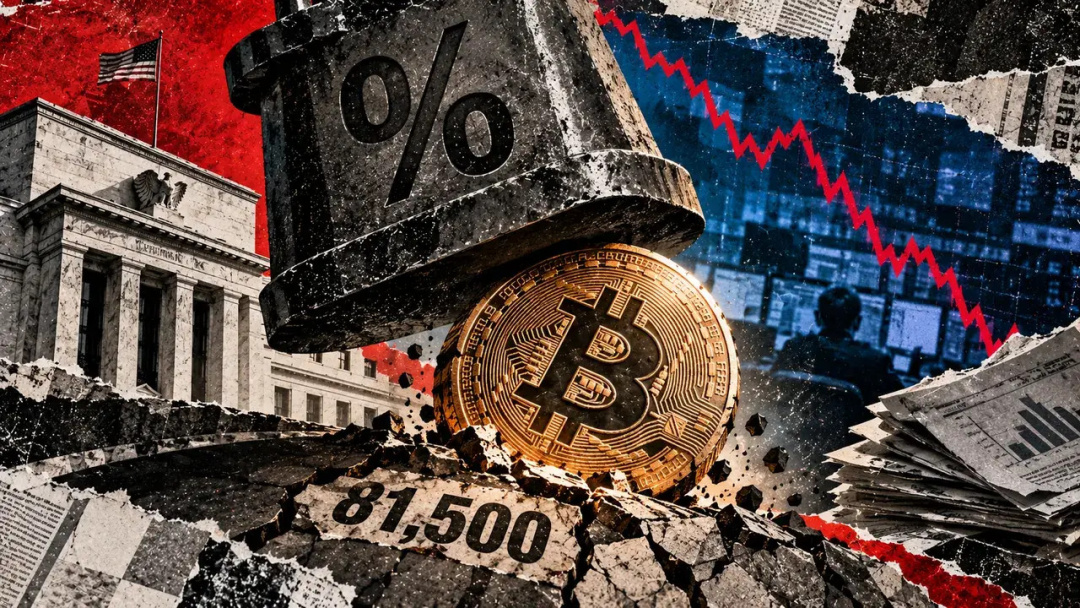
Bitcoin's Resilience Driven by $2 Billion Cash Influx Amid Inflation Data

The latest PCE inflation reading for July showed a headline rate of 3.7% and a core rate of 3.3%, both of which remain above the Federal Reserve's target. This data prompted futures markets to adjust the likelihood of a September rate hike to approximately 44%, an increase from 36% prior to the report. On the same day, Bitcoin reached an intraday high of $79,251.60, trading near $78,000 at the time of reporting.
Ryan Lee, chief analyst at Bitget Research, noted that while the inflation figures align with expectations, they do not significantly alter the ongoing policy discussions. He anticipates that Bitcoin's price will continue to be influenced by factors such as ETF flows, spot liquidity, and derivatives positioning.
Market Reading & Resources
Sponsor funding complete. Trade on.
According to Glassnode, US-traded Bitcoin ETFs absorbed $2.23 billion during Bitcoin's recent price surge, marking the strongest seven-day intake of 2026 without any outflow days. Additionally, Farside Investors reported another $314.3 million in inflows on August 25 alone, primarily driven by $284.4 million into BlackRock's IBIT, contributing to a total of approximately $2.6 billion in positive inflows from August 17 to August 25.
All wallet sizes, from small holders to large addresses, have been accumulating Bitcoin simultaneously. Notably, August 19 saw the largest dollar-denominated short liquidation event in Glassnode's dataset since 2019, with around 85% of liquidations occurring from short positions.
Typically, a rally driven by forced buying would leave a noticeable impact on the futures market, with fresh leverage rebuilding quickly after liquidation. However, during this period, futures open interest fell by 11% in BTC terms, and funding rates remained close to neutral, indicating that new speculative long positions did not replace the liquidated shorts.
Sygnum Bank's CIO, Fabian Dory, commented that the core PCE data, in conjunction with strong service-led PMI data and a weak payroll report, suggests a gradual disinflation rather than a demand shock. He believes this combination is beneficial for digital assets, even if it lacks dramatic impact, as it does not compel the Fed to change its current stance.
Dory highlighted that factors such as Treasury cash balances, the eSLR, private credit creation, and stablecoin expansion do not necessitate a policy pivot to remain positive, cautioning against interpreting a quiet inflation print as a sign of a stable backdrop.
The total market capitalization of stablecoins is currently around $303.7 billion, having increased by $2.8 billion over the past week, despite modest 30-day growth. Data from NYDIG indicates that stablecoin supply rose by $1.25 billion during the recent rally, primarily from USDC, suggesting improved liquidity on trading platforms.
Key price levels for Bitcoin include a self-custody cost basis shelf between $81,000 and $86,000, with a dealer gamma flip near $82,300. Glassnode identifies a settled close above $83,300 as a confirmation level for a genuine breakout, contingent on continued ETF inflows.
Conversely, the short-term holder cost basis is around $70,000, with a firmer support level between $62,000 and $65,000. A retreat to the original squeeze level near $62,900 could potentially reverse the current bullish sentiment.
Dory emphasized that the current inflation and labor data do not necessitate a rate hike or cut, suggesting that the Fed's policy remains easier than warranted. Each FOMC meeting that passes without action effectively acts as easing, providing structural support for risk assets without requiring a dovish pivot from the Fed.
Bitcoin's current performance shows a 1.44% increase over the past 24 hours, maintaining its position as the leading cryptocurrency by market capitalization. As the market approaches significant events such as options expiry and the Jackson Hole meeting, the dynamics surrounding Bitcoin's price will be closely monitored.