Kevin Warsh's Jackson Hole Address Expected to Clarify Fed's Inflation Strategy
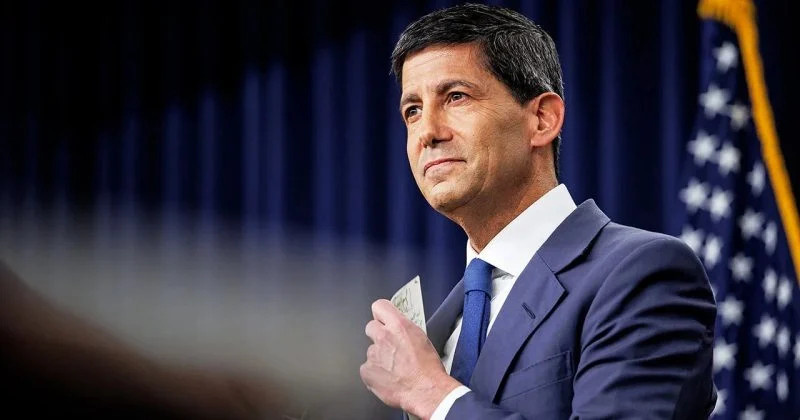
With the Jackson Hole Economic Policy Symposium on the horizon, investors are keenly awaiting Federal Reserve Chair Kevin Warsh's first major keynote address. Warsh, who assumed the role on May 22, 2026, has been cautious in providing forward guidance, a shift from the approach taken by his predecessor, Jerome Powell. Analysts at TD Securities, including Oscar Munoz, have identified this symposium as a pivotal moment for Warsh to reaffirm the Fed's commitment to its inflation targets.
The upcoming event, scheduled for August 27 to 29, has historically been a platform for Fed chairs to set the tone for monetary policy. The July FOMC meeting raised concerns among investors, as Warsh's comments led to skepticism about the Fed's dedication to controlling inflation, which remains above the target level. This uncertainty has left market participants questioning how the central bank plans to address the inflation gap.
Market Reading & Resources
Sponsor funding complete. Trade on.
A recent survey by Bank of America indicates that 69% of fund managers expect Warsh's address to maintain a neutral stance, avoiding any overtly hawkish or dovish signals. The Jackson Hole symposium has a track record of influencing market expectations; for instance, Ben Bernanke's 2010 speech hinted at a second round of quantitative easing, while Jerome Powell's 2022 address delivered a stark warning about the challenges of managing inflation.
For Warsh, the keynote on August 29 represents a critical opportunity to define his leadership style as Fed Chair. Analysts predict he will likely use this platform to reinforce the Fed's inflation mandate, although he may refrain from indicating specific interest rate changes. Investors will be particularly attentive to any insights regarding the Fed's reaction function, which outlines how the central bank evaluates incoming data to inform policy decisions. Warsh's reduced reliance on forward guidance has made this framework less transparent compared to previous years.
The expectation of neutrality among fund managers suggests that the markets have largely factored in a non-event. Warsh's history as an inflation hawk, marked by his previous dissent for tighter policies during his time on the Fed's Board of Governors, adds another layer of scrutiny to his upcoming remarks. Any indication of a shift in his stance will be closely analyzed by market participants, who are eager for clarity on the Fed's inflation strategy as Warsh prepares for this significant address.