South Africa's ANC Faces Significant Voter Backlash Ahead of Local Elections
In South Africa, communities are grappling with impassable roads, severe potholes, burst water pipes, and overflowing trash, all while facing high levels of unemployment, hunger, and crime. This dire situation has been exacerbated by a recent surge in violence against foreign nationals, which has resulted in several deaths and forced over 176,000 individuals to flee the country, primarily returning to Zimbabwe, Malawi, and Mozambique.
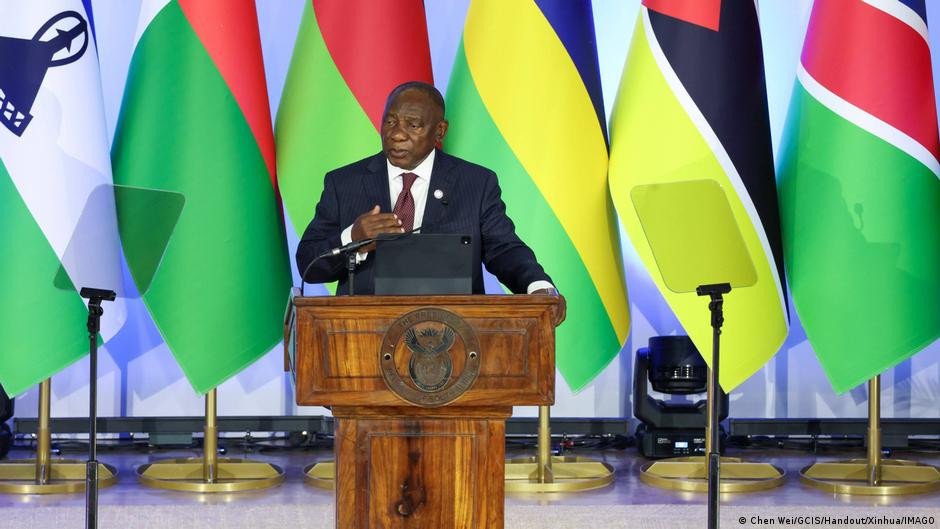
At the Southern African Development Community (SADC) summit in Durban, a vigilante group called March and March demanded that neighboring countries take back their citizens, reflecting a growing anti-migrant sentiment that many attribute to deeper public dissatisfaction with the ANC's governance. President Cyril Ramaphosa expressed his concern over the violence directed at foreign nationals, stating he felt both ashamed and troubled by the situation.
Market Reading & Resources
Sponsor funding complete. Trade on.
Fredson Guilengue from the Rosa Luxemburg Foundation noted that the rising hostility towards migrants is indicative of broader frustrations with the ANC's inability to address critical issues such as job creation, inequality, crime, and the overall quality of life. With local elections scheduled for November 4, many South Africans are expected to voice their discontent over the lack of public services and deteriorating infrastructure.
The ANC, historically led by Nelson Mandela, is projected to perform poorly in the upcoming elections, potentially worse than its already disappointing showing in the 2024 general elections, where it secured only 40.2% of the vote. Guilengue suggests that little has improved since then, with persistent high unemployment, crime, and corruption rates.
Political analysts predict that voters may turn to opposition parties, particularly the Democratic Alliance (DA), which has traditionally garnered support from white voters and has been part of a national unity government with the ANC since 2024. In a notable development, former Cape Town mayor Helen Zille, known as the "Iron Lady," is running as the DA's candidate for mayor in Johannesburg, aiming to revitalize the city amid its ongoing crisis.
The ANC has faced ongoing leadership challenges, and while impeachment proceedings against President Ramaphosa have been temporarily halted, they have nonetheless tarnished his public image. Ramaphosa has been implicated in a money laundering investigation stemming from a theft at his Phala Phala game farm, although he has denied any wrongdoing.
Guilengue remarked that the ANC's strategy appears to be delaying these proceedings to avoid coinciding with the elections, potentially pushing them until after the next general election in 2029 when Ramaphosa will no longer be eligible to serve as president.
The ANC leadership, which is supposed to combat corruption, is itself under scrutiny for various allegations. Analyst Daniel Silke highlighted the ongoing erosion of the ANC's power, suggesting that it will become increasingly challenging for the party to maintain its influence as its approval ratings decline.
Silke noted that the current political landscape reflects a significant turning point in South Africa, with the black electorate becoming more polarized and fragmented. He identified key issues such as a stagnant economy, a shrinking manufacturing sector, and a lack of trust in political institutions as contributing factors to public discontent.
As the elections approach, the critical question remains whether former ANC supporters will turn out to vote for opposition parties or abstain from voting altogether. Silke anticipates that voters will likely distribute their support among various parties, including the DA, the MK Party of former president Jacob Zuma, and smaller ethnically aligned parties, potentially leading to complex coalition governments.
In conclusion, while the ANC and DA remain the two largest parties in South Africa, neither is expected to secure a majority. The choice of coalition partners will play a crucial role in shaping the country's future governance and public service delivery.