Warsh Eliminates Forward Guidance, Impacting Market Stability
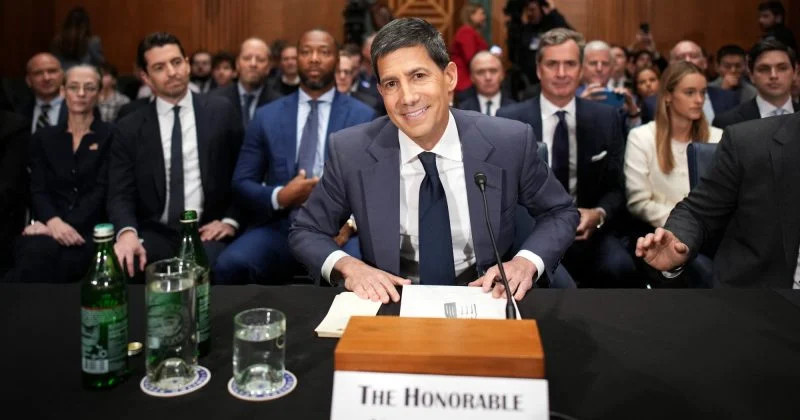
Kevin Warsh has taken a bold step as the new chair of the Federal Reserve by eliminating forward guidance, a tool that has been a staple of the central bank's communication strategy for over a decade. This change was announced during the FOMC meeting on June 17, 2026, where the committee's policy statement notably lacked the forward-looking language that markets have come to rely on. Warsh's decision marks a departure from the era of clear signals regarding future rate moves, which he believes may have constrained the Fed's ability to respond effectively to rapid economic changes.
In addition to removing forward guidance, Warsh also chose not to provide his own interest-rate projections in the quarterly dot plot, a chart where Fed officials typically indicate their expectations for future rates. This move underscores his commitment to a more flexible approach to monetary policy, which he argues is necessary in light of the inflationary pressures that have emerged during the pandemic.
Market Reading & Resources
Sponsor funding complete. Trade on.
Forward guidance has been a key strategy for central banks since the 2008 financial crisis, aimed at reducing uncertainty and stabilizing economic expectations. However, Warsh contends that this approach limited the Fed's agility during the recent inflation surge, as the central bank found itself tied to its previous commitments even as economic conditions shifted.
Under Warsh's leadership, working groups are expected to propose further changes to the Fed's communication style, advocating for shorter and more focused policy statements. This shift is reminiscent of the experience of the Bank of Canada during the 2008 crisis, where explicit forward guidance helped stabilize markets but led to confusion and volatility when the approach was altered.
Goldman Sachs has characterized the transition away from forward guidance as potentially leading to "growing pains," suggesting that increased volatility in interest rates could be on the horizon. The immediate effects of this policy change are likely to manifest in the front-end rate markets, where traders have relied heavily on the Fed's guidance for their pricing strategies. Without this anchor, the range of possible outcomes for each Fed meeting is expected to widen significantly.
The broader concern is that a lack of explicit communication from the Fed could result in market misalignment. When the Fed provided clear guidance, mispricing was generally contained, as market participants operated from a shared understanding of the central bank's intentions. However, a Fed that prioritizes flexibility over transparency may create greater opportunities for mispricing, leading to sharper corrections when actual economic conditions diverge from market expectations. Warsh's strategy reflects a significant shift in the Fed's approach, one that aims to enhance responsiveness at the potential cost of increased market turbulence.