Cathie Wood anticipates no Federal Reserve tightening until 2026
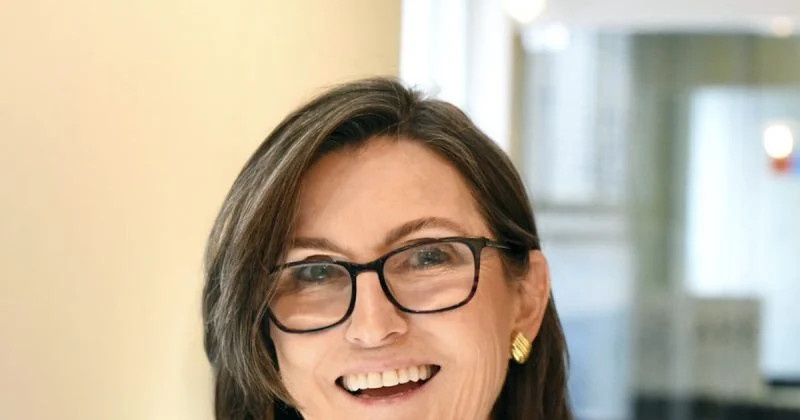
Cathie Wood, the CEO and CIO of ARK Invest, has expressed her belief that the Federal Reserve's days of raising interest rates are over for the foreseeable future. She envisions the U.S. economy as a 'coiled spring' ready to unleash significant growth, attributing this potential to a combination of rising productivity, decreasing inflation, and ongoing economic challenges. Wood argues that these factors make it unlikely for the Fed to tighten monetary policy in 2026.
Wood's analysis begins with her observation of a three-year rolling recession, during which the U.S. economy has been absorbing the impacts of post-COVID supply chain disruptions and an aggressive rate-hiking cycle. Since March 2022, the Fed has raised rates from 0.25% to 5.5% by July 2023, leading to a notable decline in housing activity, which has dropped approximately 40% to levels not seen since 2010. Manufacturing has also been in a state of persistent contraction.
Market Reading & Resources
Sponsor funding complete. Trade on.
Regarding inflation, Wood references Truflation data from early January 2026, which indicates inflation at 1.7%. She believes that broader inflation could turn negative as productivity continues to rise. Her forecast suggests that unit labor cost inflation could be around 1.2%, with a scenario where overall inflation falls to between 0% and 1% becoming plausible.
If these predictions hold true, Wood argues that a Federal Reserve led by Kevin Warsh would pivot from a stance of restraint to one that encourages growth.
Central to Wood's thesis is the expectation of productivity growth between 4% and 6% year-over-year, primarily driven by advancements in artificial intelligence and related technologies. Historically, U.S. productivity growth has averaged around 1.5% to 2% annually. Wood anticipates nominal GDP growth of 6% to 8% and real growth nearing 5%, describing the economic environment as 'Goldilocks,' characterized by strong growth coupled with tame inflation.
In the near term, Wood projects unemployment to exceed 5%. However, she does not see this as a negative development; rather, she believes that rising unemployment could provide the Fed with further justification to cut rates, potentially setting the stage for a robust economic recovery in the latter half of 2026.
Wood also highlights supportive policy factors such as deregulation and tax cuts that could enhance recovery momentum once it begins.
On the fixed income front, a declining inflation rate approaching zero or below would be favorable for bonds, particularly longer-duration treasuries. While Wood mentions Bitcoin as a potential portfolio diversifier, her broader economic framework does not rely on specific catalysts from the cryptocurrency market.