Market Reading & Resources
Market History

Booms, bubbles, and spectacular miscalculations. The market has quite a back catalog.

Click to View

Sponsor funding complete. Trade on.

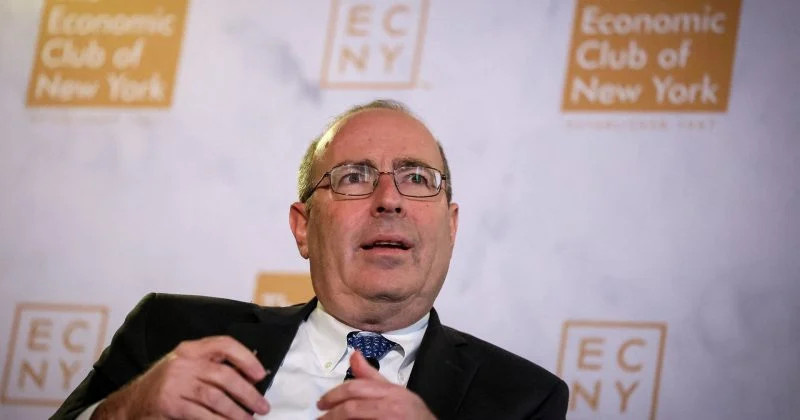
Thomas Barkin Emphasizes Unemployment Rate as Key Labor Market Indicator
Aug 7, 2026
Thomas Barkin Emphasizes Unemployment Rate as Key Labor Market Indicator

Richmond Bank President has made it clear that he prioritizes the unemployment rate as the primary indicator of the US labor market's health. Speaking ahead of the June jobs report, Barkin stated that the unemployment rate, which has remained stable between 4.1% and 4.3% for about a year, is the most significant metric, while other data points are less relevant.

Job growth has been modest, with only 50,000 jobs added in December 2025, a figure that is minimal compared to a labor force exceeding 160 million. In a speech from November 2025, Barkin pointed out that the three-month average job growth had slowed to around 29,000. He described the current job market as a "low-hire, low-fire" environment, indicating that while layoffs are not widespread, hiring is also not robust.

Market Reading & Resources
Market History
Click to View
Macroeconomics & Central Banking
Click to View
Investing Books
Click to View

Sponsor funding complete. Trade on.

By August 2025, the was at a historically low 4.3%, but it rose to 4.6% by January 2026 before returning to its previous range. Barkin's insights are particularly relevant as he is a member of the Federal Open Market Committee, meaning his views can significantly influence interest rate decisions that affect financial markets.

The Federal Reserve operates under a dual mandate to maintain price stability and maximize employment. Barkin's emphasis on the unemployment rate as a key labor market metric suggests that the employment aspect of this mandate is not currently under threat.

While a stable unemployment rate between 4.1% and 4.3% is generally seen as indicative of a healthy labor market, it is important to note that this figure only accounts for those actively seeking work. A decline in labor force participation could lead to a misleadingly low unemployment rate, masking potential weaknesses in the economy.

Market Reading & Resources
Market History

Booms, bubbles, and spectacular miscalculations. The market has quite a back catalog.

Click to View
Macroeconomics & Central Banking

Monetary policy, economic cycles, and central-banking references. Background reading for headlines that arrive with a rate decision.

Click to View

Sponsor funding complete. Trade on.

Recommended for You
US Non-Farm Payrolls Exceed Expectations in October
Economic Events Nov 6, 2026

US Non-Farm Payrolls Exceed Expectations in October

In October 2026, US non-farm payrolls rose by 165,000 jobs, surpassing expectations, while the unemployment rate fell to 4.1%. This data…

Market Reading & Resources
Market History

Booms, bubbles, and spectacular miscalculations. The market has quite a back catalog.

Click to View
Macroeconomics & Central Banking

Monetary policy, economic cycles, and central-banking references. Background reading for headlines that arrive with a rate decision.

Click to View
Investing Books

Investment ideas and market fundamentals for readers who prefer a thesis to a hot tip.

Click to View
Trading Journals

Record the thesis, the trade, and what actually happened. Hindsight could use some paperwork.

Click to View
Options Pricing & Volatility Books

References on options, pricing, and volatility for the research shelf. A little more homework before the next complicated position.

Click to View
Market Structure & Order-Flow Books

Books on market structure, liquidity, and order flow. Understand the machinery behind the screen, not just the flashing numbers.

Click to View

Sponsor funding complete. Trade on.

Across our publications

In Other News

Latest stories from other publications.

Explore all publications (opens in a new tab)