Federal Reserve Launches Survey to Enhance Transparency in Private Credit Market
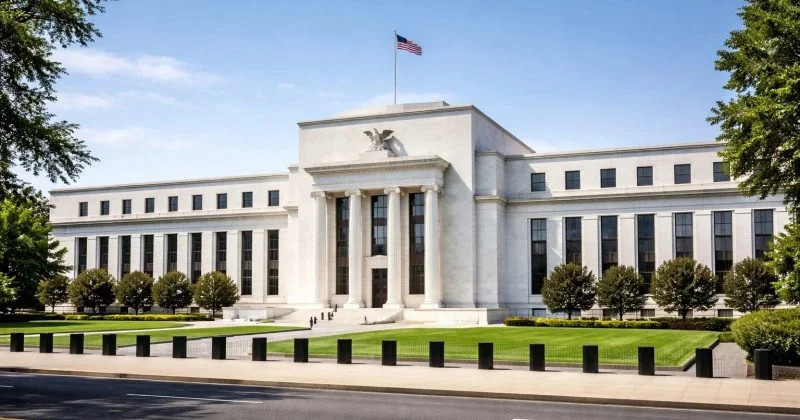
The Federal Reserve is addressing the opaque nature of the private credit market, which has expanded significantly, now exceeding $1.3 trillion. In a joint effort, the New York Fed and Dallas Fed have announced a pilot survey aimed at shedding light on this rapidly growing sector. The survey will categorize borrowers into three segments based on their EBITDA: upper middle market borrowers with over $100 million, middle market borrowers with $30 million to $100 million, and lower middle market borrowers with less than $30 million.
The primary goal of the survey is to collect data on lending standards and credit availability, as well as to understand how these factors influence the broader economy and monetary policy. Participation in the survey is strictly voluntary, and the Federal Reserve has clarified that the findings will not be used for supervisory purposes. The survey is set to launch after the third quarter of 2026, with aggregate results expected by the first quarter of 2027. This initiative is being coordinated by the New York Fed’s Open Market Trading Desk and the Dallas Fed’s Research Department.
Market Reading & Resources
Sponsor funding complete. Trade on.
The rise of private credit can be attributed to traditional banks pulling back from certain lending activities due to tighter regulations. As a result, private credit funds have stepped in to fill the gap left by these banks. Estimates of the total size of the private credit market vary, ranging from $1.5 trillion to $2 trillion, depending on the definitions used. In contrast to high-yield bonds and syndicated loans, which have more accessible data, private credit has operated with limited transparency.
In recent years, private credit has gained traction within the decentralized finance (DeFi) space, with platforms such as Maple Finance, Centrifuge, and Goldfinch developing infrastructure to integrate private credit on-chain. This tokenization of private credit aligns with the broader trend of real-world asset (RWA) tokenization, which has garnered significant interest from institutional investors.
The implications of the Fed's survey could be substantial, particularly if it reveals tightening lending standards or declining credit quality in the private credit sector. Such findings would directly impact DeFi protocols that underwrite or tokenize these loans, as on-chain private credit is intrinsically linked to the same borrowers and economic fundamentals that the Fed is examining. As the survey progresses, it may provide critical insights into the health and dynamics of the private credit market, ultimately influencing both traditional finance and the evolving landscape of decentralized finance.