Rising Bond Yields Pose Risks for Housing Market
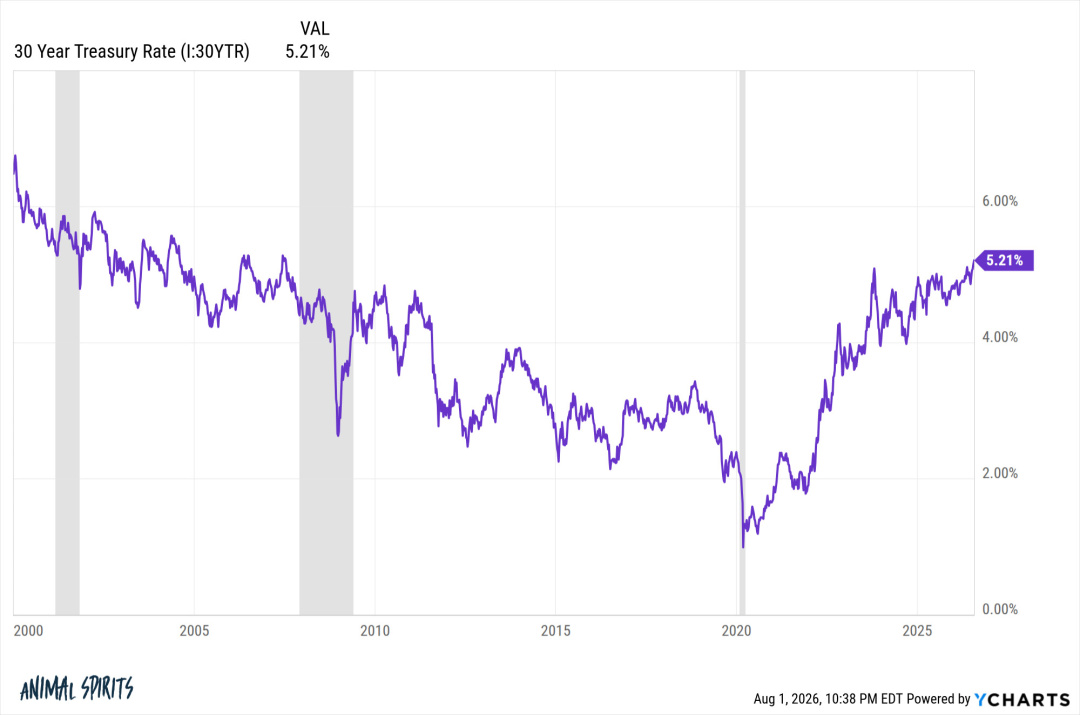
Long-term government bond yields are on the rise again, with 30-year Treasury yields now at their highest since 2007, just before the Great Financial Crisis. After hitting around 1% during the Covid crash, yields have significantly increased this decade. Historically, the average yield over the past 50 years is 6.2%, and from 1977 to the summer of 2001, long bond yields were consistently higher than current levels.
While the current yield curve might seem normal to economics students, the speed of the rate increase, coupled with persistent inflation, substantial government debt, and ongoing deficits, raises concerns among economists. Some analysts express less worry about a government debt crisis, believing that U.S. Treasuries and the dollar remain the best options. Additionally, the government does not rely solely on long-term debt for funding, as short-term paper can also be utilized unless there is a significant buyer's strike on T-bills.
Market Reading & Resources
Sponsor funding complete. Trade on.
However, the more pressing issue is the impact of rising long-term yields on the housing market. Mortgage rates are nearing 7% again, having first surpassed 6% in the fall of 2022. Many potential homebuyers had hoped this situation would be temporary, but rates have remained elevated since then. While some argue that a 6% mortgage rate is historically normal, the rapid increase in both housing prices and mortgage rates has created a challenging environment.
Housing prices have surged by 50% in just a few years, while mortgage rates have more than doubled in a short span. This swift change has left little time for buyers to adjust. Although there is some activity in the housing market, high mortgage rates and elevated prices are limiting overall participation. Consequently, the housing sector emerges as a significant risk associated with rising bond yields, with little relief in sight unless a recession occurs.