Cleveland Fed President Hammack Warns of Insufficient Economic Restraint
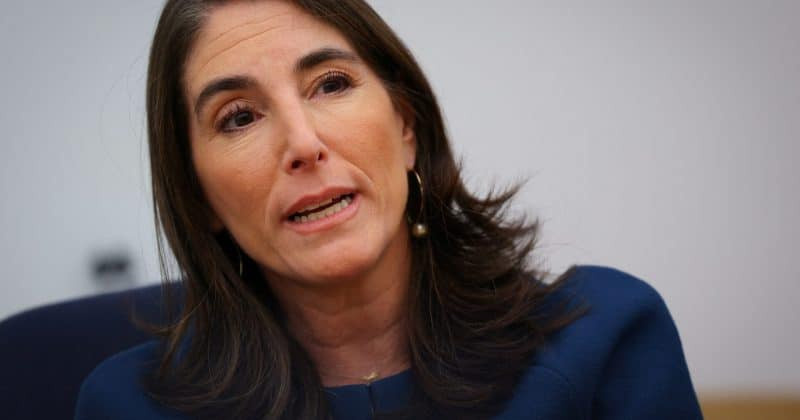
Beth Hammack, president of the Federal Reserve Bank of Cleveland, has raised alarms regarding the effectiveness of the Fed's current interest rate policy in curbing economic growth. She asserts that the economy shows little sign of policy restraint, a sentiment she has been voicing since late 2025. Hammack characterized the Fed’s stance as "barely restrictive, if at all," and noted that the federal funds rate is in the "vicinity of neutral," meaning it is not significantly impacting economic growth, which poses challenges in efforts to cool inflation.
During a speech on June 2, 2026, at the City Club of Cleveland, Hammack emphasized that the existing policy may not suffice to bring inflation back to the Fed's target of 2%. She warned that if inflationary pressures persist, interest rates may need to rise further, a scenario that could unsettle investors. Hammack's concerns center on the risk of an entrenched inflationary mindset, where businesses and consumers expect prices to continue rising, potentially perpetuating inflation.
Market Reading & Resources
Sponsor funding complete. Trade on.
The Fed's traditional approach dictates that rates should be "restrictive"—above neutral—when inflation is high. Hammack's observations suggest that the committee may be lagging in its response to current economic conditions. Since taking office on August 21, 2024, she has emerged as one of the more hawkish voices within the Fed, consistently challenging the notion that current policies are adequately tight.
Historically, the cryptocurrency market, including Bitcoin, has reacted sensitively to changes in monetary policy expectations. The downturn in 2022 coincided with the Fed's most aggressive rate hikes in decades. Although Hammack has not publicly addressed cryptocurrencies in her recent speeches, her focus remains on traditional economic indicators such as inflation and the labor market.
As Hammack continues to advocate for a more aggressive stance on interest rates, it remains to be seen whether her views will resonate with other committee members. The ongoing inflation data, which continues to exceed target levels, lends weight to her argument that the economy is not responding adequately to current interest rate levels.