Bitcoin Nears $63K as Fed's Inflation Metrics Influence Market Outlook
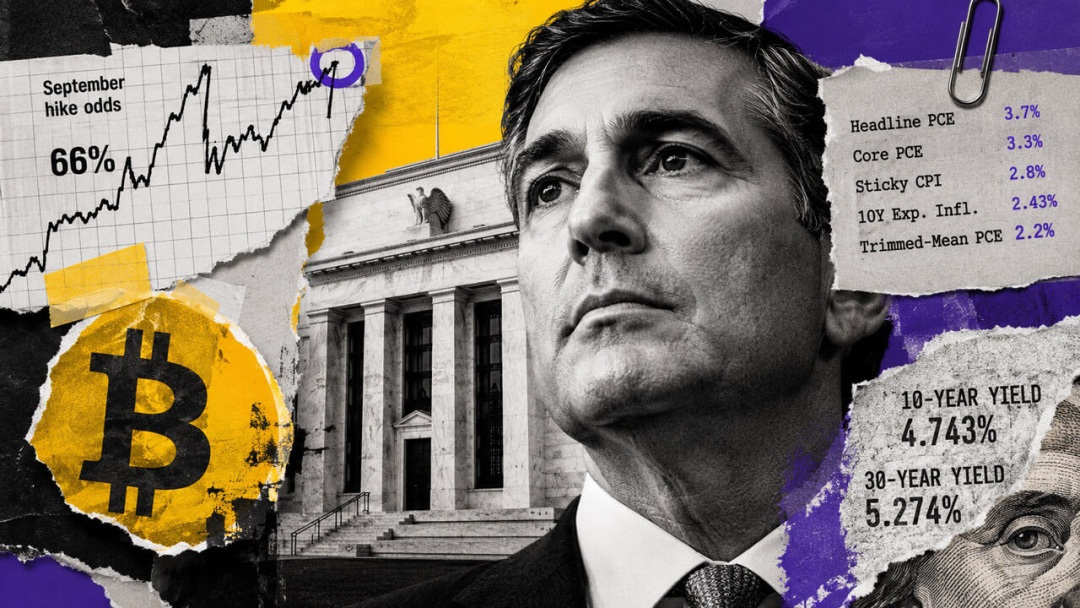
Bitcoin is trading near $63,000, with the markets assigning approximately 66% odds to a Federal Reserve interest rate hike in September. The Fed's chair has defined his reaction function around underlying inflation but has not disclosed how he weighs the indicators that inform his judgment. The official dashboard includes a range of inflation metrics, with the trimmed-mean PCE at 2.2% being particularly noteworthy. This figure is crucial as it could provide the Fed with room to maintain its current policy stance if inflation readings remain stable.
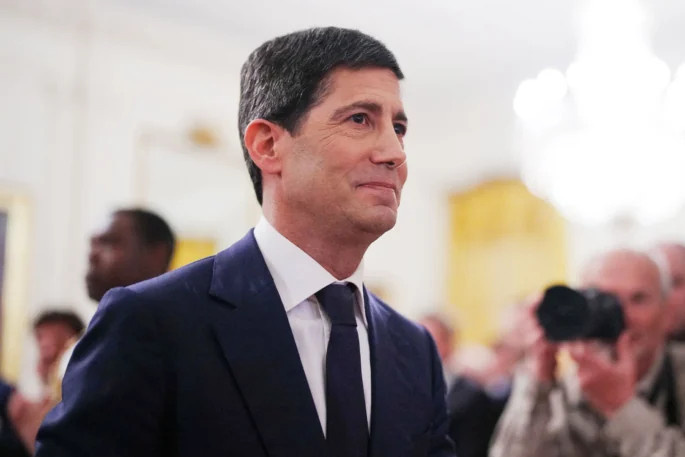
Kevin Warsh, a member of the Fed, indicated that the central bank's January strategy document keeps PCE as its formal objective. He referenced Goodhart's Law, suggesting that the Fed may revisit its strategy in January 2027. Warsh's approach allows for a broader set of inputs beyond the formal framework, which leaves Bitcoin traders navigating two uncertainties: the upcoming inflation readings and the weight assigned to each metric by the Fed.
Market Reading & Resources
Sponsor funding complete. Trade on.
The current inflation landscape shows a headline PCE at 3.7% and core PCE at 3.3%. A higher headline figure supports tighter monetary policy, while the lower trimmed mean gives the Fed flexibility, especially with long-term expected inflation near 2.43%. On July 9, the Federal Reserve established five monetary-policy task forces aimed at improving economic data collection and analysis. Warsh plans to review their findings before the Jackson Hole symposium, which could influence his upcoming speech.
The next significant policy deadline is set for September 15-16, when the FOMC will meet and release a new Summary of Economic Projections. The FOMC has maintained its target range at 3.50% to 3.75% following a 9-3 vote, with some members advocating for a quarter-point increase. As of late July, the Atlanta Fed tracker indicated an 83.05% probability of a rate hike, reflecting the rapid adjustments traders are making in response to economic signals.
The 10-year Treasury yield ended July at approximately 4.743%, while the 30-year yield reached 5.274%, the highest in 19 years. This environment creates a competitive landscape for Bitcoin, which does not offer cash yield. Higher real rates increase the opportunity cost of holding Bitcoin, supporting the dollar and tightening liquidity for risk assets. Bitcoin's recent movement toward $63,000 has occurred amid these tighter financial conditions.
On July 30, U.S.-traded spot Bitcoin funds experienced inflows of $233.1 million, followed by $87.9 million in net redemptions the next day. Despite this volatility, cumulative net inflows remain strong at approximately $51.56 billion, indicating ongoing institutional demand. However, the bearish scenario begins if Warsh prioritizes the higher headline PCE figures, which could lead to increased hike odds and further pressure on Bitcoin's price.
If inflation expectations rise alongside oil prices and economic resilience, the Fed may face stronger arguments for a rate hike, pushing Bitcoin down toward critical support levels. A sustained drop below $62,000 could lead to a test of $60,000, with further declines possible if market conditions worsen.
Conversely, a bullish scenario hinges on Warsh categorizing volatile categories as noise, allowing for a focus on the lower trimmed-mean PCE and sticky-price inflation. Continued cooling in these metrics could provide the Fed with justification to hold off on rate hikes, easing real yields and potentially weakening the dollar's support. For Bitcoin to regain momentum, it would need to surpass $64,500 and clear the recent high near $65,300, which could set the stage for a move toward $66,000 and $68,000.
The Jackson Hole meeting may offer insights into Warsh's approach to inflation metrics, while the September 16 meeting will be pivotal for determining the Fed's next steps. By then, markets may have a clearer picture of inflation trends, but uncertainty regarding how these readings will translate into policy remains, with Bitcoin already reflecting this gap in its trading.