Understanding Inflation: Beyond Oil Prices and Monetary Policy
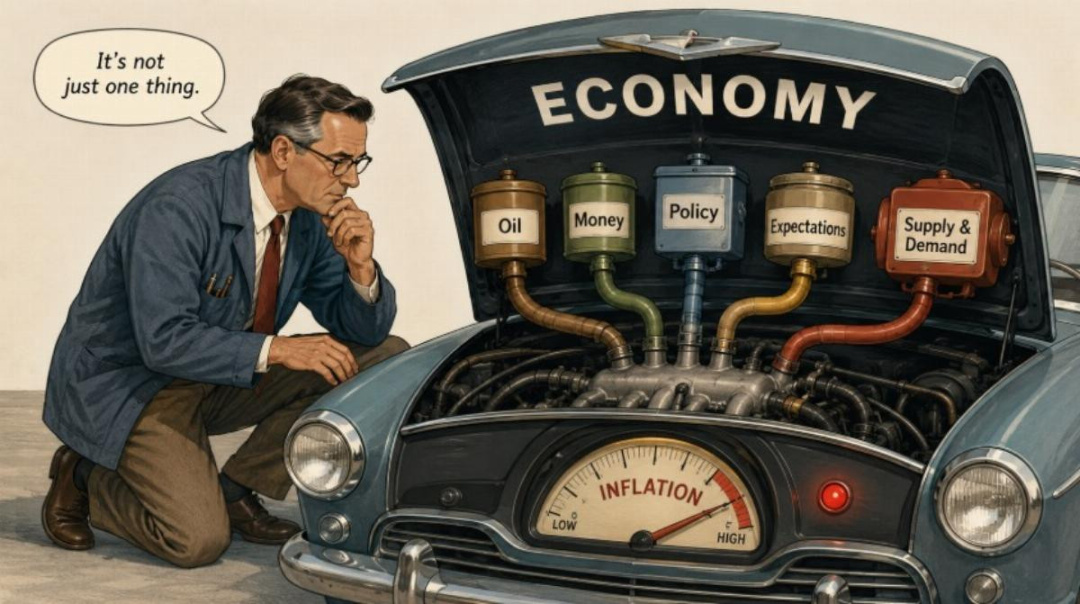
Inflation often reveals the limitations of economic certainty, challenging established theories and models. The inflationary period of the 1970s serves as a crucial lesson, highlighting the intricate relationship between oil prices, monetary policy, and sustained inflation. While the oil shocks of that decade significantly impacted the economy, they raised an important question: why did inflation persist long after the initial price increases? This distinction between a temporary price shock and ongoing inflation is vital for understanding economic dynamics.
A sudden spike in oil prices can explain immediate increases in gasoline and transportation costs, but inflation encompasses a broader, ongoing process where prices continue to rise. The 1970s illustrated how higher energy costs permeated the economy, leading to increased business expenses and wage demands. As inflation expectations grew, businesses and consumers adjusted their behaviors, embedding the initial shock into the economic cycle.
Market Reading & Resources
Sponsor funding complete. Trade on.
Milton Friedman’s assertion that inflation is fundamentally a monetary phenomenon adds another layer to this discussion. While he acknowledged that supply shocks could elevate prices, he argued that sustained inflation occurs when monetary conditions and expectations allow these price increases to proliferate. The relationship between money supply and inflation is complex, as evidenced by the 2008 financial crisis, where significant monetary expansion did not lead to immediate inflation due to various economic factors, including consumer behavior and cautious business practices.
The recent inflation surge post-pandemic further complicates the narrative. As the economy reopened, pent-up consumer demand collided with strained global supply chains and rising energy prices, creating a multifaceted inflationary environment. This scenario underscores the importance of understanding inflation as a result of various interacting forces rather than attributing it to a single cause.
Economic analysis benefits from humility, recognizing that markets respond to a multitude of influences, including incentives, institutions, expectations, and human behavior. While economic models are essential for organizing thought and identifying relationships, they should not be viewed as absolute truths. The history of inflation teaches that oversimplifying its causes can lead to misunderstandings. Instead, a comprehensive view that considers the interplay of multiple factors is necessary for grasping the complexities of inflation in today's economy. Understanding these dynamics is crucial for both economists and the public as they navigate the challenges posed by inflation.