Japan's Finance Minister Signals Intervention as Yen Approaches 40-Year Low
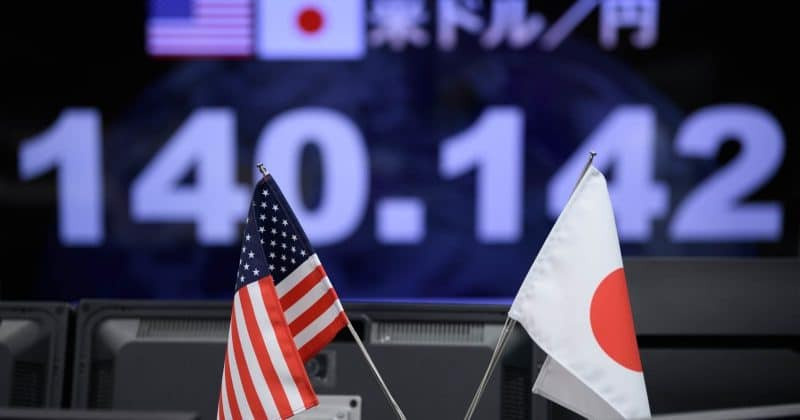
Japan's Finance Minister Satsuki Katayama has issued a warning to currency markets, indicating that the government is prepared to respond to foreign exchange movements as the yen hovers around 161.7 per dollar, a level not seen in nearly 40 years. This announcement follows a record ¥11.73 trillion ($73 billion) intervention campaign conducted between April 28 and May 27, 2026, aimed at stabilizing the currency.
The primary issue driving the yen's decline is the significant interest rate differential between the US and Japan, which continues to attract capital to the US where returns are higher. This has resulted in ongoing selling pressure on the yen. Katayama, who made history as Japan's first female finance minister when she assumed the role in October 2025, has adjusted her public messaging from earlier, more aggressive warnings to a tone of sustained vigilance. This shift suggests a strategic approach to managing market expectations, as speculators may test the limits of intervention.
Market Reading & Resources
Sponsor funding complete. Trade on.
Prime Minister Sanae Takaichi has supported this strategy, emphasizing the importance of a robust underlying economy as a long-term defense for the yen. She has also highlighted the need for coordination with US officials, as unilateral interventions can create tensions with major trading partners like the United States.
A report from June 17, 2026, raised concerns about a potential "crypto contagion risk" linked to the yen's weakness and the dynamics of carry trades. Speculative capital that flows through these trades often finds its way into risk assets, including cryptocurrencies. When these positions are unwound under pressure, it can lead to widespread selling across various asset classes, as seen during Japan's previous significant currency intervention in 2024.
Currently, the yen is trading within a critical range of 160 to 162 against the dollar. A weaker yen increases the cost of imports, particularly energy and food, which contributes to inflation. This inflationary pressure complicates the Bank of Japan's policy decisions. Should inflation continue to rise, the BOJ may face mounting pressure to increase interest rates, which could narrow the interest rate gap with the US and potentially strengthen the yen, albeit at the risk of slowing economic growth.
While Japan's recent intervention efforts have provided temporary relief, they have not addressed the fundamental issues driving the yen's weakness. As long as the interest rate differentials between the US and Japan remain significant, the yen is likely to continue facing downward pressure.