Federal Reserve Maintains Rates as Bitcoin Holds Steady Near $64K

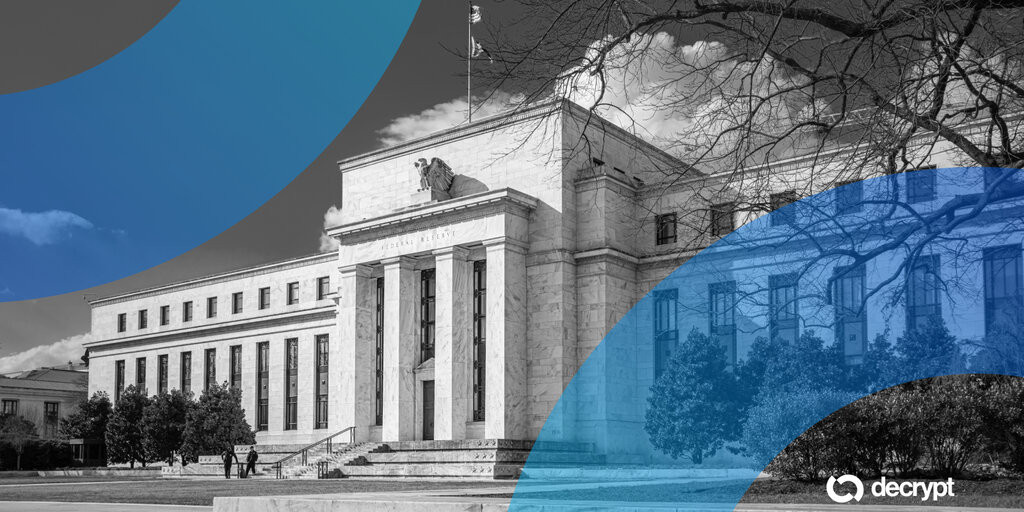
The Federal Reserve has opted to maintain its key interest rate at 3.5-3.75% for the sixth consecutive meeting, a decision that passed with a notable nine to three vote. The dissenting votes came from the presidents of the Cleveland, Minneapolis, and Dallas Fed, who called for a 25-basis-point increase, marking the sharpest split within the Federal Open Market Committee (FOMC) since September 2016. This decision has significant implications for both digital assets and broader financial markets.
In the wake of the Fed's announcement, cryptocurrency markets showed minimal movement. Bitcoin (BTC) continued to trade near $64,000, reflecting a slight decline of 0.5% on the day. In contrast, traditional equity markets reacted negatively, with the S&P 500 dropping approximately 1.5%, the Nasdaq falling 1.7%, and the Dow Jones experiencing a decline of 2.19%. This marked the worst performance for the S&P 500 on a second 'Fed day' under a new chair in modern history.
Market Reading & Resources
Sponsor funding complete. Trade on.
The Fed's statement linked ongoing inflation, which has exceeded its 2% target for over five years, to supply shocks, particularly in the energy sector. Despite these challenges, the Fed described economic activity as expanding at a solid pace, although uncertainty remains due to geopolitical tensions in the Middle East.
During a press conference, Fed Chair Kevin Warsh refrained from labeling the decision as a pause, instead referring to it as a rigorous reassessment of the economic situation. He dismissed the idea that the Fed's effective target is higher than its stated 2% target, emphasizing that five years of elevated prices cannot be resolved quickly. Warsh also noted a significant rise in Treasury yields since the last meeting, indicating tightening financial conditions.
In the digital asset space, the total market capitalization increased by 0.2% to $2.2 trillion over 24 hours, with Bitcoin losing less than 1%. Ethereum (ETH) fell by 1% to around $1,900, while BNB rose 0.6% to $574. XRP and Solana (SOL) also experienced minor declines.
Market analysts have varied interpretations of the Fed's decision. Steven Coltman, Head Macro Strategist at 21Shares, described the decision as a relief for investors but cautioned that persistent inflation could complicate future meetings. Kaan-Luca Koymen, an investment strategist at Sygnum Bank, noted that the Fed is keen to keep its options open.
The equity markets' reaction was particularly notable, with the S&P 500's decline being the worst recorded for a second meeting under a new Fed chair. Kathy Bostjancic, Chief Economist at Nationwide, justified the decision to hold rates steady through the end of the year, citing supply-driven inflation factors that a rate hike would not address. Conversely, Jeffrey Gundlach of DoubleLine Capital argued that regardless of inflation's origins, the Fed must adhere to its 2% target, suggesting that a rate hike may still be necessary.
Current market expectations indicate a 65% chance of a 25-basis-point hike in the near future, with various platforms estimating the odds slightly lower. Some economists, like Steven Douglass from NISA Investment Advisors, predict a rate cut by March 2027, while others, including Morgan Stanley Investment Management's Jim Caron, suggest that the tightening may already be occurring through rising Treasury yields, viewing post-meeting dips as potential buying opportunities.