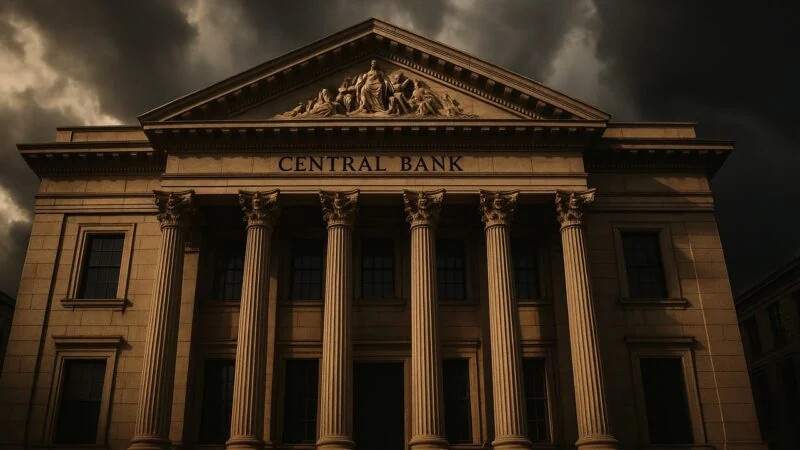
ECB Expected to Pause Rate Hikes Amid Inflation Concerns

The European Central Bank (ECB) is poised to keep interest rates steady in its upcoming meeting, while signaling the possibility of future rate hikes in September due to a recent surge in energy prices. Following an increase in rates in June, the ECB has observed a series of favorable economic indicators, including stable prices and wage growth, which have lessened the urgency for immediate action. However, with oil prices surpassing $90 a barrel amid ongoing conflicts in the Middle East, the ECB may need to act in the fall to mitigate potential inflationary pressures from rising energy costs.
Oliver Rakau from Oxford Economics noted that the ECB is likely to adopt a "hawkish pause," indicating that while current data does not necessitate immediate tightening, the central bank remains vigilant about future inflation risks. Financial markets are pricing in two to three additional rate hikes, with expectations for the first increase by October and another by April. This market sentiment is largely influenced by fluctuating oil prices rather than fundamental economic conditions.
Market Reading & Resources
Sponsor funding complete. Trade on.
Despite the rising oil prices, many economists believe that the euro zone will not require extensive policy tightening to manage inflation. Morgan Stanley's Jens Eisenschmidt pointed out that even with current oil prices, inflation is projected to remain close to the ECB's target next year, suggesting that only a couple of rate hikes may be necessary. He emphasized that a deposit rate of 2.5% would be mildly restrictive, allowing for potential cuts if inflation trends align with forecasts.
In light of this mixed economic outlook, ECB President Christine Lagarde faces the challenge of addressing price pressures while managing market expectations. The ECB has yet to see the feared second-round effects of rising energy prices, which typically lead to increased costs across goods and services and higher wage demands. Current data shows that wage growth is easing, particularly in Germany, and firms expect subdued pay pressures moving forward.
Consumer price expectations have also moderated, with recent figures indicating minimal signs of second-round effects. Notably, services inflation has slowed, providing further evidence of a stable economic environment. However, ongoing trade tensions, elevated energy costs, and competition from China's expanding market presence are likely to pose challenges for European industries in the coming years, potentially dampening labor demand.
Additionally, the unusually hot summer weather in Europe could pose risks to food prices, with potential crop damage and low water levels affecting shipping routes. Barclays has noted that while food inflation has generally decreased, the combination of a warm summer and El Niño effects could reignite upward pressure on food prices. As the ECB navigates these complexities, it remains committed to monitoring economic conditions closely and adjusting its policies as necessary to ensure price stability.