Gold Stabilizes Near $4,000 as US Inflation Data Eases Rate Hike Fears

Gold prices found stability near $4,000 an ounce on June 25, following the release of US inflation data that aligned with market expectations. This development has slightly diminished the likelihood of a near-term rate hike by the Federal Reserve. The core Personal Consumption Expenditures (PCE) index, which is the Fed's favored inflation gauge, met forecasts, resulting in a decrease in the odds of a September rate hike from 68% to 63%.
Since reaching a peak of approximately $5,589 in January 2026, gold has experienced a significant decline, losing about 25-28% of its value. The metal had previously dipped to the $3,981-$3,999 range before stabilizing around $4,000. In the month leading up to this stabilization, gold saw a decline of roughly 10%.
Market Reading & Resources
Sponsor funding complete. Trade on.
The strength of the US dollar, which is at its highest level in about a year, has made gold more expensive for international buyers. Additionally, hawkish signals from the Fed in recent Federal Open Market Committee (FOMC) meetings have reinforced the notion that rate cuts are unlikely in the near future, while rate hikes remain a possibility. Ongoing inflation concerns, particularly those linked to geopolitical factors, have kept the central bank cautious.
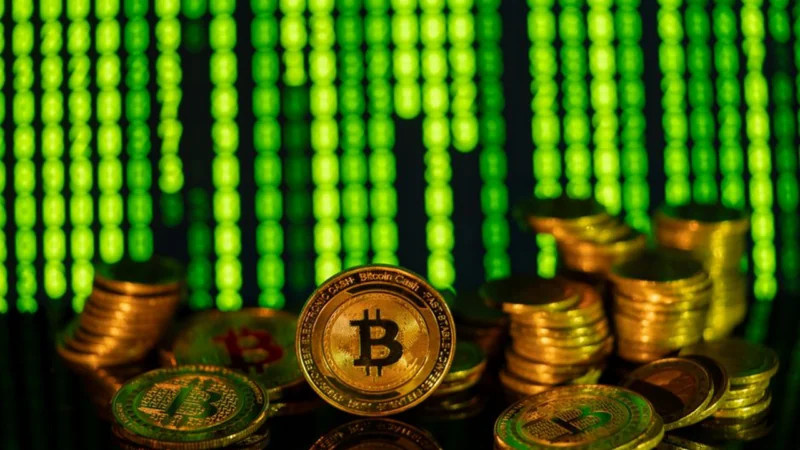
During this period, Bitcoin also saw a decline, dropping to the $61,000-$62,000 range, mirroring gold's trajectory. Both gold and Bitcoin are non-yielding assets, meaning they do not pay interest or dividends. As the opportunity cost of holding these assets rises—due to increasing interest rates or expectations of such—investors tend to shift their capital toward assets that generate returns. This trend has been evident as equities, particularly those related to AI, have attracted significant investment flows.
While the PCE data meeting expectations has reduced the urgency for the Fed to implement aggressive rate hikes, it is important to note that inflation remaining at elevated levels does not equate to a decrease in inflation. Should upcoming inflation data exceed expectations, pushing September rate-hike odds back above 68%, both gold and Bitcoin could face further declines. Gold has already lost more than a quarter of its value since its January peak, and another hawkish surprise could push it below $4,000, with Bitcoin likely following suit into the mid-to-low $50,000s.