Federal Reserve Executes $30 Million Reverse Repo Operation
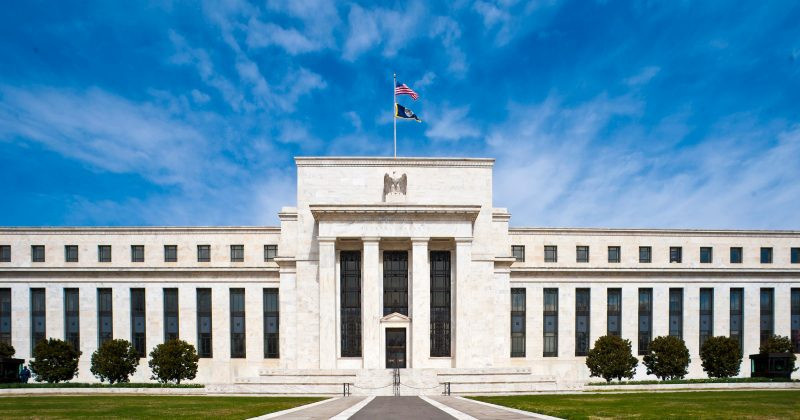
The Federal Reserve recently executed a $30 million overnight reverse repurchase agreement operation involving six counterparties. This operation marks a stark contrast to the facility's previous peak, where it absorbed more than $2 trillion in cash daily. As of mid-July 2026, the overall balances in the overnight reverse repo facility have plummeted to around $100 million, reflecting a decline of approximately 99.99% from the heights observed during the pandemic era from 2020 to 2023.
The overnight reverse repo facility serves as a temporary holding space for cash, where eligible counterparties such as money market funds and banks lend money to the Fed overnight in exchange for Treasury securities as collateral, earning the ON RRP rate in return. Launched in its current form around 2013, the facility gained prominence during the pandemic when the Fed implemented quantitative easing to inject liquidity into the markets. At its peak, the facility was absorbing over $2 trillion daily, acting as a significant reservoir of capital.
Market Reading & Resources
Sponsor funding complete. Trade on.
The recent $30 million operation appears to be a routine small-value test conducted by the New York Fed, part of standard procedures to ensure the facility's operational integrity. The drastic reduction in the RRP facility indicates important changes in liquidity conditions within the U.S. financial system. The substantial drop from over $2 trillion to roughly $100 million suggests that a large pool of previously sidelined capital has been redeployed, with some of it absorbed by Treasury issuance. Consequently, the banking system now holds sufficient reserves without relying on the Fed’s overnight liquidity support.
Previously, when the RRP was at $2 trillion, it represented a significant amount of capital earning a risk-free rate while sitting on the sidelines. The current minimal usage of the RRP facility implies that the favorable liquidity conditions it once provided are largely exhausted. There is no longer a $2 trillion reservoir poised to enter the markets.
Research indicates that there are no direct connections between the RRP facility and digital assets or cryptocurrencies. However, the overarching macro liquidity conditions still influence token prices, even if traditional monetary mechanisms operate separately from decentralized finance and crypto markets.