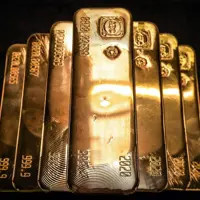
Gold Prices Decline Amid Rising Oil Prices and Inflation Concerns
On July 15, 2026, gold prices experienced a notable decline, with spot gold falling 0.6% to $4,028.43 per ounce after reaching $4,100.49 the previous day. Futures also dropped, easing 0.8% to $4,035.50 per ounce. The primary factor behind this downturn is the surge in oil prices, which have climbed above $80 per barrel for three consecutive sessions, largely due to escalating geopolitical tensions between the U.S. and Iran. Rising energy costs typically lead to increased inflation expectations, which complicates the Federal Reserve's approach to interest rates, a situation that gold investors find concerning.
Gold is traditionally viewed as a hedge against inflation, particularly when inflation is high and interest rates are low. In such scenarios, the cost of holding gold is minimized since low rates mean less opportunity cost compared to yield-bearing assets. However, when inflation fears prompt central banks to consider raising interest rates, gold faces competition from assets like bonds and cash that offer yields.
Market Reading & Resources
Sponsor funding complete. Trade on.
Kelvin Wong from OANDA pointed out that current market sentiment is more influenced by geopolitical factors than by the underlying Consumer Price Index (CPI) data. This suggests that fear and uncertainty are driving market behavior rather than a clear understanding of economic fundamentals. Interestingly, the CPI data for June 2026 indicated the first monthly price decline since April 2020. Prior to this release, traders had anticipated a 76% chance of a Federal Reserve rate hike by September 2026, but this probability dropped to 58% following the CPI announcement.
Despite the positive CPI headline, Federal Reserve officials have cautioned that one data point does not establish a trend, emphasizing the need for consistent evidence of disinflation before making policy changes. Gold now finds itself in a precarious position, balancing a softer inflation reading against the pressures of rising oil prices.
Looking ahead, the Producer Price Index (PPI), which gauges wholesale inflation, will be closely monitored by traders. A strong PPI report could reinforce the inflation narrative driven by oil prices, potentially extending gold's current pullback. Conversely, a weak PPI reading might shift sentiment back toward gold.
The relationship between gold and Bitcoin is also noteworthy; both assets tend to react similarly to changes in the real interest rate environment. As real rates rise, the appeal of non-yielding assets like gold and Bitcoin diminishes. With the Federal Reserve's September meeting approaching, the uncertainty surrounding interest rate decisions remains high, with a 58% chance of a hike. Investors will be keenly observing Federal Reserve commentary, oil prices, and geopolitical developments, as these factors are interconnected and significantly influence market dynamics.