Bitcoin Stays Above $73,000 as December Rate Hike Odds Increase
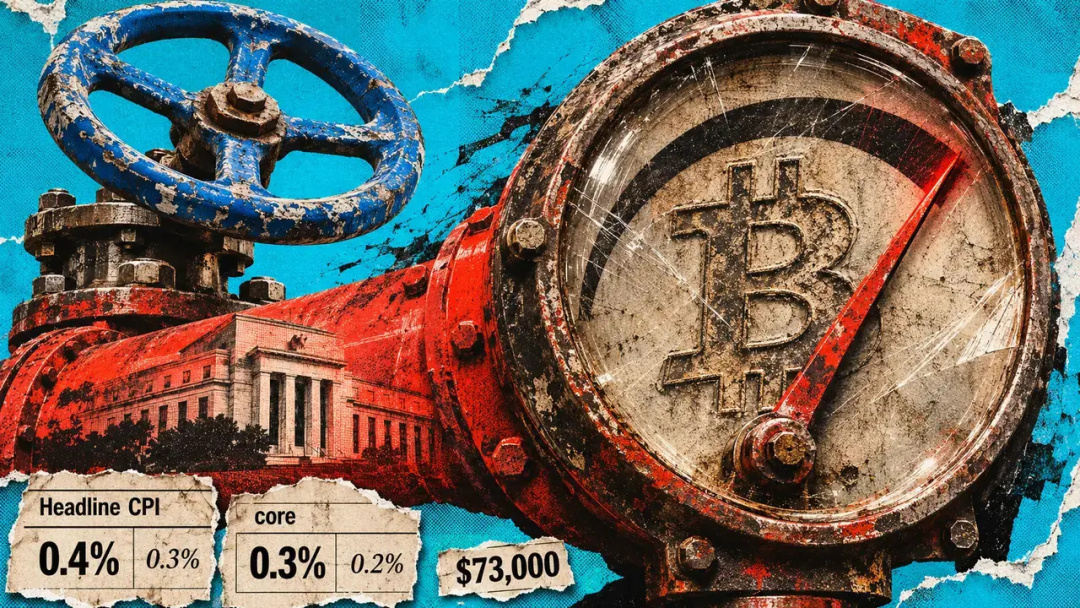
The odds of a 50-basis-point rate hike by the Federal Reserve in December increased from 0% to 13.6% on November 10, following October's Consumer Price Index (CPI) data that surpassed forecasts. Concurrently, Bitcoin's price fell to an intraday low below $73,000. The likelihood of a 25-basis-point hike also rose, moving from 84% to 86.4%, as reported by the CME FedWatch tool.
The headline CPI rose by 0.4%, compared to a forecast of 0.3%, while core CPI increased by 0.3%, matching expectations. This data aligns with the threshold set by Federal Reserve Governor Christopher Waller for considering a 50-basis-point increase. The market is now anticipating more tightening measures, with the 25-basis-point hike becoming the more likely scenario.
Market Reading & Resources
Sponsor funding complete. Trade on.
The expected hike for December shifted from 21.0 basis points to 28.4 basis points, reflecting a 7.4 basis point increase. A 50/50 split between the two hike sizes would suggest an average increase of 37.5 basis points, indicating that the market remains closer to its previous expectations rather than a full 50 basis point hike.
For the odds of a 50 basis point hike to become more favorable, the ratio would need to increase significantly. The December 9 decision probabilities, as indicated by the CME FedWatch snapshot, suggest that the market is still weighing its options carefully.
The October CPI report was hotter than anticipated but cooler than September's figures, with the headline slowing from 0.6% to 0.4%. Core inflation remained steady at 0.3% for the third consecutive month, while transportation services saw a notable rise of 0.8%.
Looking ahead, three key developments could bolster the case for a 50 basis point hike at the Federal Open Market Committee (FOMC) meeting in December. First, the core Personal Consumption Expenditures (PCE) data, set to be released on November 25, must confirm the CPI trends, ideally showing monthly increases around 0.3% to 0.4%. Second, the jobs report on December 4 must indicate a labor market capable of absorbing further tightening. Lastly, several voting members of the Fed would need to publicly support the idea of faster tightening.
Key Economic Indicators Set to Influence December Rate Decisions
The upcoming Producer Price Index (PPI) report on November 13, the minutes from the October meeting on November 18, and the Fed's communications blackout beginning on November 28 will all play critical roles in shaping market expectations leading up to the December meeting. The decision will be made on December 9, with the November CPI data being released the following day, adding an additional layer of uncertainty.
A recent poll of economists indicated that a 25 basis point increase is the most likely outcome for December, with many expecting it to be the final hike of the cycle. However, even a modest increase could tighten financial conditions if the Fed signals more hikes in 2027 than the market currently anticipates. This scenario poses risks for Bitcoin, as the potential for higher rates for an extended period could exert downward pressure on its price.
In the wake of these developments, the two-year Treasury yield rose approximately 19 basis points to 4.74%, while the 10-year yield approached 4.99%. The dollar index gained 0.6%, and gold prices fell by more than 2%. Additionally, recent data from Farside Investors indicated net outflows of about $1.5 billion from US spot Bitcoin ETFs between November 2 and November 9.
Bitcoin's Market Dynamics Amid Rate Hike Speculations
As Bitcoin's price hovers around $73,000, Glassnode's report identified a liquidation band between $73,000 and $76,000, suggesting levels where leveraged positions might be forced to close. A decline to $70,000 would represent a further 4.1% drop, while a concentration of long liquidations exists between $60,000 and $63,000. These figures highlight the precarious nature of Bitcoin's current market position.
If core PCE cools to around 0.2% month-over-month and hiring slows, a 25 basis point increase with a softer outlook could become more feasible. Conversely, if inflation remains persistent and employment figures hold steady, even a quarter-point increase accompanied by signals of further tightening could keep pressure on Bitcoin's price. The overall market sentiment will depend on ETF flows, spot demand, and leverage, with continued outflows and weak demand potentially deepening any declines.