Warsh Addresses Congress on Fed's Inflation Strategy and Rate Policy
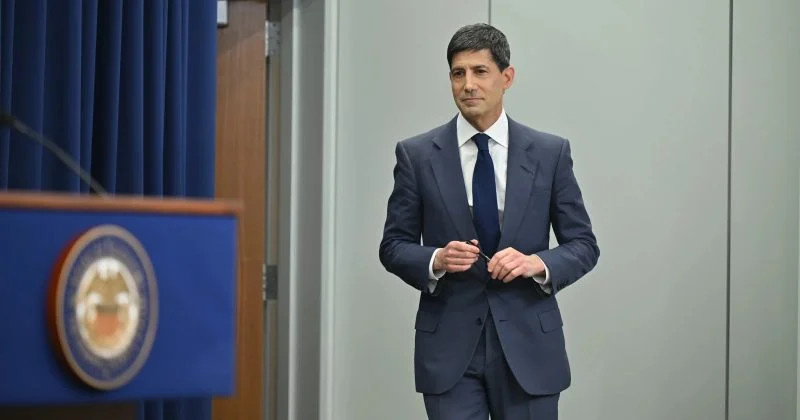
Kevin Warsh, the newly confirmed Federal Reserve Chair, made his debut before Congress during hearings on July 14 and 15, 2026, presenting a Monetary Policy Report that signals a significant shift in the Fed's approach to inflation. The report, released on July 10, outlines the Fed's current stance on monetary policy and highlights the importance of money supply dynamics, a topic that has been largely overlooked in recent communications from the central bank under previous leadership.
In the June FOMC meeting, the Fed opted to maintain its policy rate at 3.5 to 3.75%, a decision that has become central to macroeconomic trading strategies. Warsh's report emphasizes robust capital investment trends alongside ongoing inflation pressures, presenting a complex scenario for the Fed. While strong investment typically indicates a healthy economy, it also suggests that demand is not decreasing sufficiently to alleviate inflation on its own.
Market Reading & Resources
Sponsor funding complete. Trade on.
Warsh reiterated the Fed's longstanding 2% inflation target, framing it as a firm commitment rather than an aspirational goal. This shift in tone is significant, as it signals the Fed's resolve to tackle inflation head-on. The timing of the congressional hearings is particularly relevant, as they coincide with the release of new Consumer Price Index (CPI) and Producer Price Index (PPI) data, which Congress will likely reference during discussions.
Interestingly, the Monetary Policy Report does not mention Bitcoin, Ethereum, or any specific cryptocurrencies, indicating that under Warsh's leadership, the Fed is treating digital assets as outside its direct monetary policy considerations. This separation suggests that while the Fed's decisions will impact risk assets, including cryptocurrencies, they are not a focal point of current monetary policy discussions.
As expectations for rate cuts fluctuate, risk assets like cryptocurrencies often experience rallies. Conversely, when the market anticipates a prolonged period of higher rates, capital tends to shift towards yield-bearing investments, moving away from speculative assets. The CPI and PPI data released in conjunction with Warsh's testimony will be critical for modeling future rate paths. Warsh has clearly communicated his framework: a steadfast commitment to the 2% inflation target, a focus on money supply dynamics, and a readiness to employ policy tools in response to persistent inflation.