Bank of England Increases Interest Rates to 4% Amid Inflation Concerns
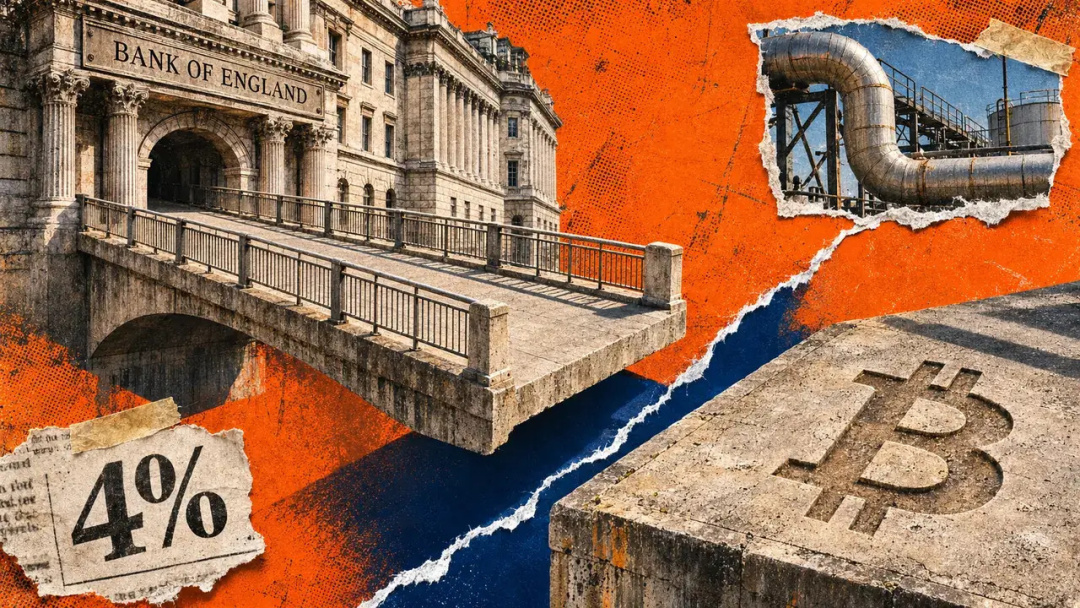
The Bank of England has raised its benchmark interest rate by 25 basis points to 4% on November 5, responding to heightened inflation concerns stemming from a prolonged energy shock. This decision underscores the potential pressures on investors, particularly those involved in Bitcoin, who may face increased costs associated with sterling borrowing.
The rate hike was supported by eight policymakers, while one member, Catherine Mann, advocated for a more aggressive increase of 50 basis points to 4.25%. The Bank's projections indicate that UK consumer price inflation could hover around 5% in the second quarter of 2027, following a reported inflation rate of 3.5% in September. The anticipation of a 4% rate in November was already factored into the market, suggesting that the announcement may not have come as a surprise to investors.
Market Reading & Resources
Sponsor funding complete. Trade on.
Despite the decision, there is limited evidence that the energy shock is broadly affecting wage and price-setting across the economy. Policymakers determined that the economic activity was sufficiently robust to warrant action, with stronger-than-expected growth contributing to their decision. The focus now shifts to how persistent inflationary pressures will influence future policy decisions, particularly regarding wage demands and pricing strategies from firms.
UK borrowing costs have been on the rise, with forward market interest rates impacting the rates faced by households and businesses. Benchmark two-year mortgage rates have increased by nearly 50 basis points since early September, indicating a tightening of financial conditions. Business lending remains strong, although the uneven nature of financing pressures suggests that not all sectors are equally affected.
Impact of Rising Costs on Crypto Investments
For investors with exposure to sterling borrowing, the increase in financing costs could limit their capacity to maintain Bitcoin positions. A broader reduction in risk appetite among investors may also lead to decreased allocations to cryptocurrencies. Historical research supports the notion that tightening monetary policy can adversely affect crypto prices. An IMF working paper published in August 2023 found that actions by the US Federal Reserve to tighten monetary policy reduced aggregate crypto price factors, highlighting the interconnectedness of traditional and crypto markets.
The rise in energy costs has prompted the Bank of England's decision to increase rates, with the implications for Bitcoin largely dependent on investor behavior and financing conditions. The inflation outlook remains conditional, relying on energy prices averaged over recent weeks. The Bank's future policy decisions will be guided by incoming evidence, particularly regarding wage growth, pricing behavior from firms, and overall demand in the economy.
Implications for Bitcoin and Investors
The Bank of England's decision to raise interest rates is likely to have significant implications for Bitcoin and other cryptocurrencies. As financing costs rise, the willingness of investors to take risks may diminish, potentially leading to a decrease in demand for Bitcoin. The correlation between crypto prices and traditional equity markets has been increasing, particularly with the entry of institutional investors into the crypto space. This trend raises concerns about how traditional monetary policy decisions can impact the cryptocurrency market.
The Bank of England's approach to managing inflation through interest rate adjustments reflects broader economic challenges. As energy prices fluctuate and inflationary pressures persist, the central bank's decisions will continue to play a crucial role in shaping the economic landscape and influencing investor strategies moving forward.