US Services Growth Slows Amid Rising Inflation Pressures
US services growth experienced a slowdown in October, as indicated by the Institute for Supply Management's (ISM) report released on November 4. The headline Purchasing Managers' Index (PMI) registered at 54.5, a decrease from September's 54.9. This figure, however, remains above the neutral mark of 50, suggesting that services activity continues to expand, albeit at a reduced pace.
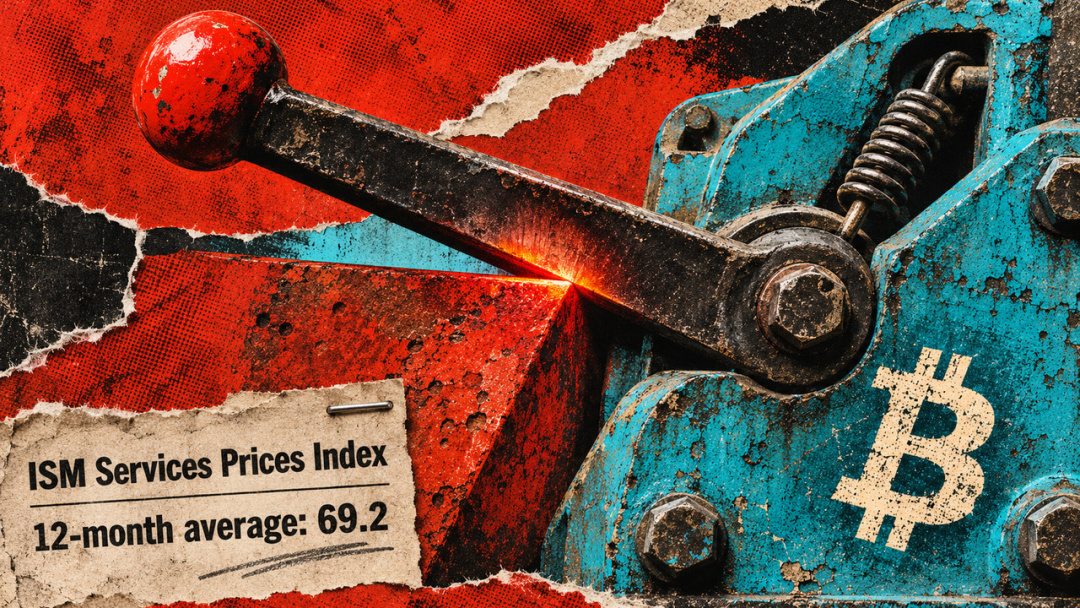
The monthly prices index saw a slight decline to 73 from 74, yet the 12-month average surged to 69.2, marking the highest level since April 2023. This persistent cost pressure raises concerns about the potential for rate relief, which could provide support for Bitcoin and other assets.
Market Reading & Resources
Sponsor funding complete. Trade on.
The ISM's diffusion indexes, which gauge the direction and breadth of reported changes, reflect a complex economic landscape. The prices reading of 73 summarizes survey responses indicating rising prices, while the inflation rate measures the magnitude of price changes in percentage terms. The rolling average captures this pressure over a longer timeframe, highlighting the ongoing inflationary environment.
Business activity and new orders also showed signs of easing, with figures dropping to 53.8 and 55.9, respectively. Conversely, the employment index increased to 51.4, suggesting that hiring has strengthened even amid softer demand indicators. This mixed data complicates the Federal Reserve's decision-making process regarding interest rates.
Despite the easing in monthly growth and prices, the 12-month average remains a significant concern for policymakers. The Federal Reserve maintained its target range at 3.75%-4% on October 28, prior to the release of the services report. The central bank's statement acknowledged elevated inflation levels and indicated that further information would be necessary to determine the appropriate policy stance moving forward.
Economic Activity and Investor Risk Outlook
The potential for softer economic activity could lead to easier rate expectations, which might encourage investors to take on more risk. However, the persistent cost pressures complicate this pathway to relief. Establishing a shift in financial conditions will require clear evidence of how markets are pricing the economic outlook, beyond the survey data alone.
An IMF working paper published in August 2023 highlighted that US monetary tightening has impacted a common factor influencing crypto prices, suggesting that shared movements across crypto assets are closely tied to investor risk appetite, similar to trends observed in equity markets. This historical context underscores the complexity of Bitcoin's response to economic indicators like the ISM survey.
Inflationary Pressures and Market Reactions
Looking ahead, the next significant economic indicator will be the October employment report, scheduled for release on November 6. The results of this report could further influence the balance between growth and inflation concerns that policymakers face. The critical question remains whether incoming data will lead to lower rate expectations and yields, potentially bolstering Bitcoin demand without leverage.
As the economic landscape evolves, the interplay between inflationary pressures and market reactions will be crucial. Investors are closely monitoring these developments, as any signs of easing inflation could shift market sentiment and influence investment strategies. The ongoing dialogue around the Federal Reserve's policy decisions will continue to shape the outlook for both traditional and crypto markets, particularly as they navigate the complexities of inflation and economic growth.