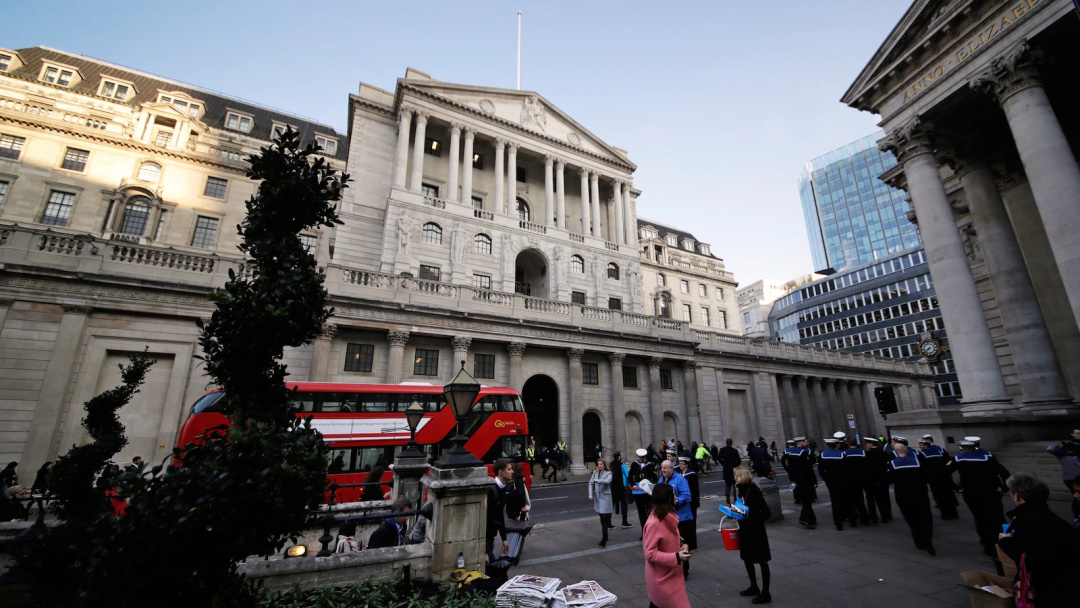
Bank of England Expected to Raise Interest Rates for First Time in Three Years
The Bank of England is widely expected to raise interest rates for the first time in three years today, responding to increasing inflation pressures linked to the ongoing US-Iran war. This decision aligns with similar actions taken by other central banks around the world. Economists surveyed by Reuters anticipate that the Bank of England's Monetary Policy Committee will vote 7-2 in favor of raising the Bank Rate from 3.75% to 4%. This marks the first increase since August 2023, when inflation exceeded 6%, and the first adjustment since a rate cut last December.
Hetal Mehta, chief economist at St James's Place, expressed confidence that the committee will proceed with the hike. She noted that recent increases in energy prices and signs of robust economic growth have likely influenced the committee's decision. In the previous meeting in September, the committee had a 6-3 majority in favor of maintaining the current rates. Governor Andrew Bailey indicated that businesses are now better equipped to absorb higher costs compared to 2022, when inflation peaked at 11% following Russia's invasion of Ukraine.
Market Reading & Resources
Sponsor funding complete. Trade on.
The prolonged US-Iran conflict has kept oil prices around $100 per barrel and natural gas prices significantly elevated, raising concerns that these costs could permeate the broader UK economy. Inflation in September rose unexpectedly to 3.5%, surpassing the Bank of England's 2% target and the 3% forecast made in July. The UK economy has shown unexpected resilience, partly attributed to increased spending on artificial intelligence, with GDP in August reflecting the largest annual growth since 2022.
Despite this growth, there are few indications of significant second-round effects of inflation on wage negotiations, with businesses forecasting annual wage settlements around 3.5% for the upcoming year. Finance Minister John Healey's recent budget did not substantially alter the outlook for growth or inflation.
Bank of England's Dilemma on Rate Decisions
Policymakers at the Bank of England are divided on whether to wait for clear signs of second-round inflation effects before raising rates, fearing that delaying action could exacerbate inflation, which has consistently exceeded targets for nearly five years. Bailey has pointed to rising market interest rates as a justification for maintaining the current rates, as investors have shifted their expectations regarding potential rate cuts.
Market Reactions and Future Projections
Some members of the Monetary Policy Committee, like Catherine Mann, are concerned that the increase in rate expectations may indicate a loss of control over inflation. Financial markets currently anticipate at least three quarter-point rate hikes for the following year, in addition to the expected increase this month, which would elevate UK interest rates above those projected for the US. However, many economists caution against overly aggressive rate hikes, predicting more modest adjustments moving forward. Peder Beck-Friis, an economist at PIMCO, expects only one rate hike in February, followed by a prolonged period of stability, particularly as the UK economy appears weaker than that of the US.
Without significant second-round effects on core inflation, the tightening of monetary policy is viewed as a precautionary measure. The Bank of England's decisions in the coming months will be closely watched as they navigate the complexities of inflation and economic growth in a challenging global environment.