Tech Stocks Boost US Market Despite Apple Decline
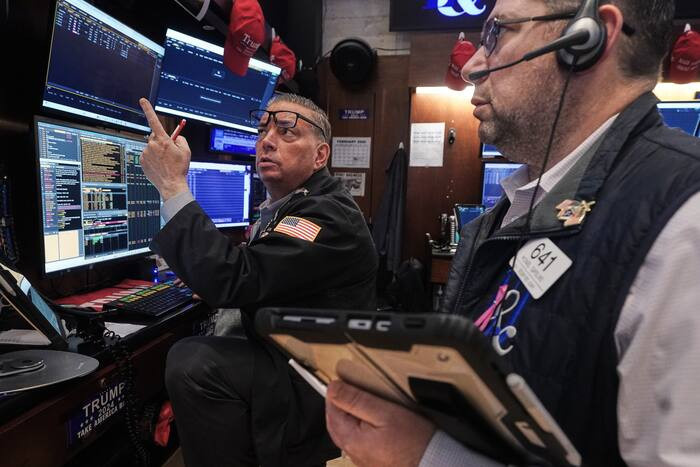
A rebound for some influential Big Tech stocks lifted the U.S. market on Tuesday, despite a drop for Apple and mixed trading elsewhere on Wall Street. The S&P 500 rose by 0.4%, even though most stocks within the index fell. The Dow Jones Industrial Average dropped 197 points, or 0.4%, while the Nasdaq composite climbed 0.8%.
The stock market has been shaky recently as technology and artificial intelligence stocks swing on worries that their prices have surged too high amid the AI frenzy. Several influential AI-related stocks showed strength on Tuesday, supporting the market after fluctuating from gains in the morning to losses in the afternoon a day earlier. Nvidia rose 2.3%, becoming a significant driver for the S&P 500, closely followed by Broadcom, which increased by 3.1%. Other companies heavily investing in AI, such as Microsoft, Amazon, and Meta Platforms, also saw their stocks rise by more than 2%.
Market Reading & Resources
Sponsor funding complete. Trade on.
Apple, traditionally viewed as a Big Tech company less reliant on AI, is still feeling the effects of the AI boom. The demand for memory chips, driven by the rush to build AI data centers, has increased costs, impacting Apple's profitability. The company indicated it expects to earn less profit from each dollar of revenue during the final quarter of the year, leading to a 1.9% decline in its stock price, despite reporting stronger profit and revenue than analysts anticipated for the latest quarter.
Palantir Technologies also experienced a drop of 1.6%, even though it reported better-than-expected profits. The software company noted that it earned more from U.S. companies than from the U.S. government for the first time, with U.S. commercial revenue soaring 148% year-over-year.
The market's movements coincided with voters casting ballots in Tuesday's midterm elections, where issues like the rising cost of living and AI were prominent. Historically, midterm elections have not significantly impacted the broad market, with the S&P 500 showing positive returns in the six months following such elections since 1970, according to analyst Brock Weimer from Edward Jones.
Speculation on Wall Street suggests that a Democratic sweep of Congress could lead to increased regulations on AI development, although Donald Trump would still hold the presidency and the power to veto. Generally, Wall Street prefers a split control of Congress, viewing it as less risky for transformative policies that could reshape the economy.
Strong Earnings Reports Drive Market Optimism
On the positive side, stocks of several companies that reported stronger-than-expected profits for the summer saw significant gains. DuPont surged by 8.6%, marking one of the largest increases in the S&P 500, while Celanese climbed 5%. Revvity rose 7.8% after exceeding analysts' expectations, with CEO Prahlad Singh noting improving market conditions.
Overall, the S&P 500 rose 27.52 points to 7,568.92, while the Dow Jones Industrial Average fell 197.26 to 51,786.72, and the Nasdaq composite increased by 207.65 to 25,372.01. Expectations remain high for companies to continue delivering substantial profit gains as the U.S. economy persists, despite high inflation and elevated interest rates. This optimism contributed to the S&P 500 reaching a record high last month.
An encouraging report on the U.S. job market indicated that employers were advertising more job openings at the end of September than economists had expected, pushing the yield on the 10-year Treasury up to 4.96% from 4.91% late Monday.
Global Market Trends Reflect Mixed Sentiment
In the oil market, prices continued to fluctuate, with Brent crude climbing above $107 per barrel overnight before briefly dropping below $101 in the morning amid ongoing uncertainty regarding the war with Iran. It settled at $103.60, down 1.1% from Monday.
Internationally, stock indexes fell in Europe following a mixed finish in Asia, with South Korea’s Kospi dropping 3.6% due to losses for its tech giants, Samsung Electronics and SK Hynix. Conversely, stocks in Australia rose 0.3% after the central bank raised its benchmark interest rate for the fifth time this year.